
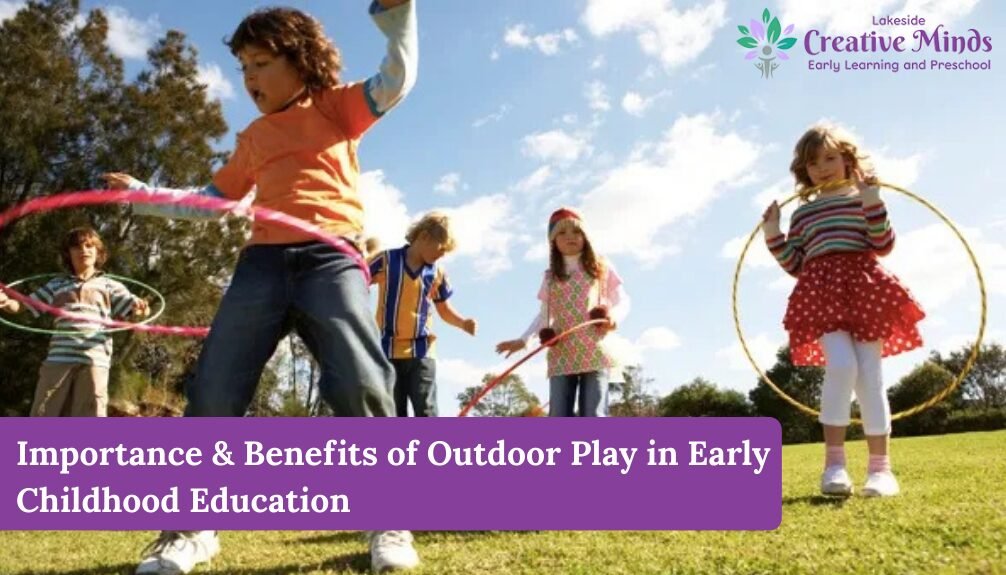

In today’s digital-first world, childhood looks very different from what it did a generation ago. Screens have replaced sandpits, and structured indoor routines often dominate a child’s day. As a result, many parents and educators are questioning the importance of early childhood care and education and whether modern learning environments are meeting children’s real developmental needs.
The truth is simple and evidence-based: outdoor play is a core pillar of effective early childhood education, not an optional extra. It supports physical health, emotional well-being, social skills, and cognitive growth in ways indoor-only learning cannot replicate. This approach aligns closely with play-based learning, where children learn best through hands-on experiences rather than passive instruction.
What Is Outdoor Play in Early Childhood Education?
Outdoor play in early childhood education refers to learning experiences that occur outside traditional indoor classrooms. These experiences may be structured or unstructured, guided by educators while still allowing children freedom to explore.
Outdoor learning environments often include:
- Physical play such as climbing, balancing, and running
- Sensory exploration, such as sand, mud, and water play activities, for infants
- Nature-based discovery
- Group play that builds communication and cooperation
In early learning settings, outdoor play is not random. It is intentionally designed to support learning outcomes defined in the early years learning framework, which emphasises holistic development, wellbeing, and active engagement.
Unlike indoor environments, outdoor spaces encourage movement, curiosity, and real-world problem-solving, key components of meaningful early education.
Why Outdoor Play Is Essential in Early Childhood Education
The importance of outdoor play in early childhood education lies in its ability to support the whole child, not just academic readiness.
Supports Holistic Development
Outdoor play integrates physical, emotional, social, and cognitive learning into one experience. Children move, think, interact, and self-regulate simultaneously.
Encourages Play-Based Learning
Outdoor environments naturally support play-based learning, allowing children to experiment, explore, and make decisions independently.
Builds Confidence and Independence
Outdoor play encourages manageable risk-taking, which helps children develop resilience, confidence, and self-trust.
Aligns with National Learning Standards
Outdoor learning directly supports outcomes outlined in the early years learning framework, making it an essential part of quality early education programs.
Key Benefits of Outdoor Play in Early Childhood
The benefits of outdoor play in early childhood are well-documented and long-lasting.
Physical Development and Motor Skills
Outdoor play strengthens muscles, coordination, and balance—activities such as climbing, running, and lifting support gross motor development and overall physical health.
Specialised outdoor experiences, such as water play with preschoolers, further enhance coordination and sensory processing while keeping children actively engaged.
Cognitive Development and Problem-Solving
Outdoor play encourages children to think critically and creatively. Whether navigating obstacles or experimenting with cause and effect, children develop:
- Problem-solving skills
- Creativity
- Curiosity and initiative
These skills are essential foundations for lifelong learning.
Social and Emotional Development
Outdoor play promotes cooperation, empathy, and communication. Group activities help children learn how to:
- Share and negotiate
- Resolve conflicts
- Build friendships
These social skills are critical for successful transitions into formal schooling.
Emotional Wellbeing and Self-Regulation
Outdoor environments reduce stress and support emotional balance. Activities such as nature exploration and water play benefit emotional regulation by providing calming, repetitive sensory input.
This is especially valuable in the early years, when children are still learning how to manage emotions.
The Role of Water Play in Outdoor Learning
Water play is one of the most effective outdoor learning experiences in early childhood education. It supports development across multiple domains and is suitable for all age groups.
For younger children, water play activities for infants provide sensory stimulation that supports brain development and early motor skills. As children grow, the benefits of water play for toddlers include improved coordination, early science understanding, and emotional regulation.
For preschool-aged children, structured water exploration promotes problem-solving, cooperation, and early mathematical concepts such as volume and measurement. These experiences demonstrate how outdoor play blends learning and enjoyment seamlessly.
Outdoor Play vs Indoor Learning: What Research Shows
Indoor learning environments offer structure, but when overused, they restrict movement and exploration. Research consistently shows that children who engage in regular outdoor play demonstrate:
- Better attention spans
- Improved emotional regulation
- Stronger physical health
Outdoor play enhances indoor learning rather than competing with it. Children return to indoor activities more focused and engaged after meaningful outdoor experiences.
This balance is essential for high-quality early childhood education.
Outdoor Activities in Childcare Settings
High-quality childcare centres prioritise outdoor activities as a daily part of their curriculum. Purposefully designed outdoor programs support learning outcomes while allowing children freedom to explore.
Effective outdoor activities in childcare settings include:
- Educator-guided play experiences
- Nature-based learning zones
- Sensory areas, including water and sand play
These environments reflect best practices in early childhood care and education, ensuring children develop skills needed for future learning stages.
How Outdoor Play Supports School Readiness
Outdoor play directly contributes to school readiness by developing essential pre-academic and life skills. Through outdoor experiences, children build:
- Concentration and listening skills
- Emotional control
- Confidence in group settings
These skills are particularly important for families preparing children for formal education, including School Readiness in Raymond Terrace, where early learning programs increasingly emphasise outdoor and play-based approaches.
Children who engage in regular outdoor play adapt more easily to school routines and expectations.
Encouraging Outdoor Play at Home and in Childcare
For Parents
- Prioritise outdoor time daily
- Encourage free exploration rather than constant instruction
- Include simple experiences like water play and nature walks
For Childcare Centres
- Embed outdoor play into daily routines
- Align outdoor activities with the early years learning framework
- Provide training for educators on extending learning outdoors
Consistency matters more than complexity.
Common Myths About Outdoor Play
Outdoor play is unsafe.
With proper supervision, outdoor play helps children learn risk awareness and resilience.
It’s just play, not learning.
Outdoor play is a powerful learning method aligned with play-based learning principles.
Indoor learning is more important.
Indoor learning without outdoor experiences limits development and engagement.
FAQs
Q1: Why is outdoor play important in early childhood education?
Outdoor play supports physical, cognitive, social, and emotional development through active, real-world learning experiences.
Q2: What are the main benefits of outdoor play in early years?
The benefits of outdoor play in early years include improved motor skills, better emotional regulation, stronger social skills, and enhanced learning readiness.
Q3: How do outdoor activities in childcare support child development?
Outdoor activities in childcare promote play-based learning by encouraging movement, exploration, and peer interaction in a structured, supervised environment.
Q4: How does outdoor play help with school readiness?
Outdoor play builds concentration, emotional control, confidence, and social skills that are essential for school readiness.
Q5: Is water play part of effective outdoor learning in early childhood?
Yes, water play benefits early childhood development by supporting sensory learning, coordination, problem-solving, and emotional regulation.
Final Thoughts: Why Outdoor Play Truly Matters
The importance of outdoor play in early childhood education goes beyond physical activity. It supports emotional well-being, cognitive growth, social development, and lifelong learning habits.
At Lakeside Creative Minds, outdoor play is thoughtfully integrated into daily learning experiences to support every stage of early development. By combining intentional outdoor environments with play-based learning and the early years learning framework, children are allowed to grow, explore, and thrive in a supportive early learning setting.
Outdoor play is not time away from learning; it is where meaningful learning begins.

