
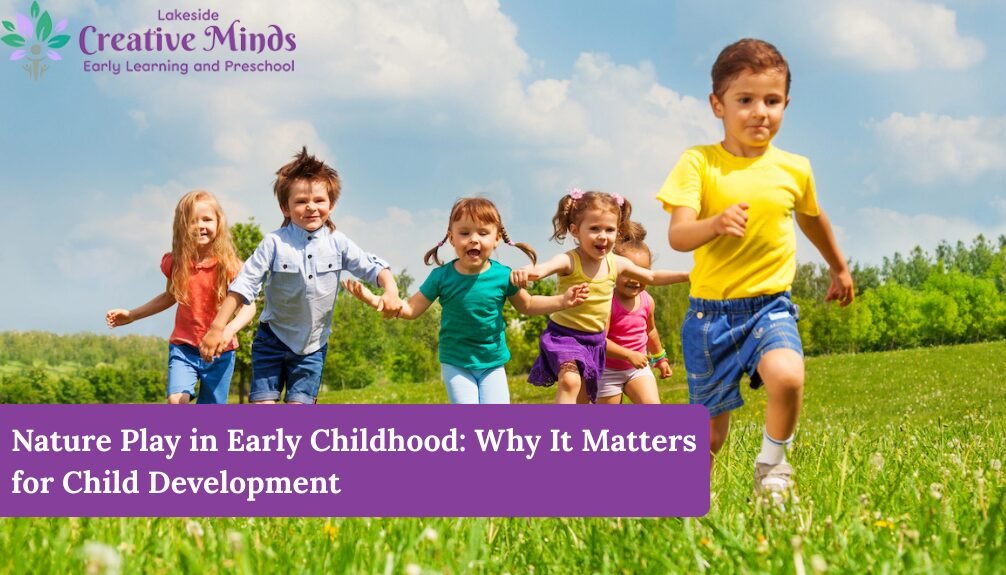

In today’s fast-paced, screen-heavy world, children spend far less time in natural environments than ever before. Parks, gardens, and open fields are often replaced by structured classrooms and digital devices. Many parents and educators are asking: “How can we ensure children get meaningful, hands-on learning experiences?”
The answer lies in nature play in early childhood. Nature play is not just outdoor fun; it is essential for healthy development. It supports physical growth, cognitive skills, emotional well-being, and social learning. At Lakeside Creative Minds, we integrate nature-based experiences into our preschool learning programs and play-based learning activities to nurture confident, capable, and resilient children.
What Is Nature Play?
Nature play refers to unstructured or guided play that takes place in natural environments, such as gardens, forests, or even backyard green spaces. Unlike standard playgrounds, nature play engages children with the unpredictability of the outdoors.
Examples of nature play include:
- Planting and digging in gardens
- Observing insects, birds, and plants
- Climbing trees or navigating logs
- Exploring sand, mud, or water through water day preschool activities
These experiences stimulate curiosity and allow children to make discoveries while being supported by trained educators. Childcare outdoor activities that incorporate nature play are carefully designed to promote learning while allowing children freedom to explore and make choices.
Nature play differs from general outdoor play because it involves direct interaction with natural materials, encouraging children to notice, question, and experiment. This approach aligns with early years learning principles and play-based learning activities, emphasising holistic, experiential learning for young children.
The Importance of Nature Play in Early Childhood
The significance of nature play in early childhood goes beyond just fun. Children who engage with nature experience benefits across multiple developmental domains.
1. Sensory Stimulation and Cognitive Growth
Nature play exposes children to diverse sensory experiences, textures, smells, sounds, and sights. These experiences strengthen neural pathways and support early cognitive development. Activities such as digging, touching plants, or exploring water through water play activities for toddlers help children understand cause-and-effect, observation, and problem-solving.
2. Physical Development
Natural play encourages movement and physical challenges. Balancing on logs, climbing rocks, and running across uneven terrain develop coordination and gross motor skills. These benefits of outdoor play in early childhood are critical for children’s long-term health.
3. Emotional Regulation
Nature has a calming effect. Time spent in green spaces reduces stress, promotes mindfulness, and helps children regulate their emotions. Even simple water play activities for toddlers or the benefits of water play for babies can provide soothing sensory input, supporting emotional wellbeing.
4. Social Skills and Cooperation
Nature play often involves group exploration. Children learn to negotiate, share resources, and collaborate on creative projects. These interactions enhance social and emotional skills, preparing them for success in preschool programs and school readiness programs in Raymond Terrace.
5. Creativity and Problem-Solving
Unstructured nature play allows children to invent games, build structures from natural materials, and solve challenges presented by their environment. This encourages critical thinking, creativity, and independence, skills vital for later success in day care, Raymond Terrace programs, or childcare for toddlers.
Key Benefits of Nature Play
Physical and Motor Skills
Nature play builds strength, balance, and coordination. Activities like climbing trees, jumping across rocks, and digging improve fine and gross motor skills. Water play benefits for toddlers also enhance sensory and physical development, especially when integrated into preschool learning programs.
Cognitive and Problem-Solving Skills
Exploring natural environments develops critical thinking and problem-solving. Children test hypotheses, make observations, and engage in trial-and-error learning. Experimenting with water flow, arranging sticks and stones, or observing plant growth teaches foundational science and reasoning skills.
Social and Emotional Development
Group-based nature activities encourage cooperation, turn-taking, and communication. Children develop emotional awareness, empathy, and confidence through shared discovery, laying the foundation for future school readiness programs.
Sensory and Mental Wellbeing
Exposure to fresh air, sunlight, and diverse textures has measurable benefits for mental health. Children who engage regularly in nature play show reduced anxiety, improved focus, and increased overall wellbeing.
Nature Play vs Traditional Outdoor Play
While all outdoor play is beneficial, nature play offers unique advantages:
- Unpredictability: Natural environments provide challenges that encourage adaptability.
- Sensory richness: Children encounter textures, sounds, and sights that stimulate learning.
- Inquiry-based learning: Nature play fosters observation, experimentation, and critical thinking in real-world contexts.
Integrating nature play into daily routines supports play-based learning activities, complements early years learning, and enhances the overall quality of preschool programs.
Implementing Nature Play in Childcare Settings
High-quality childcare centres, including Lakeside Creative Minds, understand that nature play is essential for child development. Implementation strategies include:
- Daily time in gardens or natural outdoor areas
- Sensory play with mud, sand, or water
- Guided observation activities and mini science experiments
- Safe climbing and movement challenges
These childcare outdoor activities are carefully designed to combine freedom, creativity, and structured learning, providing children with a well-rounded early childhood experience. Centres that offer childcare for babies and childcare for toddlers integrate these experiences to ensure all age groups benefit.
How Parents Can Encourage Nature Play at Home
Parents can incorporate nature play into home routines:
- Create small garden areas for planting and digging
- Take children on nature walks to observe flora and fauna
- Encourage water day preschool activities or water play for babies and toddlers
- Allow unstructured outdoor time where children decide how to play
Even brief daily engagement with nature can enhance physical, cognitive, and emotional development, supporting school readiness programs in Raymond Terrace.
Common Misconceptions About Nature Play
Nature play is unsafe.
With supervision and safe boundaries, nature play encourages manageable risk-taking, helping children develop resilience and judgment.
It’s unstructured, so not educational.
Nature play aligns with play-based learning activities, teaching problem-solving, creativity, and collaboration in real-world contexts.
Indoor learning is more important.
While indoor activities have value, children need hands-on outdoor experiences to develop motor, sensory, and social-emotional skills, enhancing early years learning and supporting the best age to start childcare transitions.
FAQs
Q1: What is nature play in early childhood?
Unstructured or guided outdoor activities in natural environments that support learning and development.
Q2: How does nature play benefit child development?
It improves motor skills, problem-solving, social skills, and emotional wellbeing.
Q3: Can nature play be included in childcare settings?
Yes, with structured routines and educator guidance, it is safe and educational.
Q4: Is water play part of nature play?
Yes, it supports sensory learning, coordination, and problem-solving.
Q5: Why is nature play better than regular outdoor play?
It offers unpredictable, sensory-rich environments that foster creativity and critical thinking.
Final Thoughts: Why Nature Play Matters
Nature play in early childhood is more than a trend—it is a cornerstone of holistic development. From physical growth to social-emotional learning, children gain foundational skills that will serve them throughout life.
At Lakeside Creative Minds, nature play is intentionally integrated into daily routines, combining the principles of play-based learning and early years learning framework. By connecting children with the natural world, we nurture curiosity, creativity, and resilience, preparing them for school readiness programs in Raymond Terrace and providing an enriching foundation for day care, preschool programs, and Lakeside Children’s Centre offerings.

