
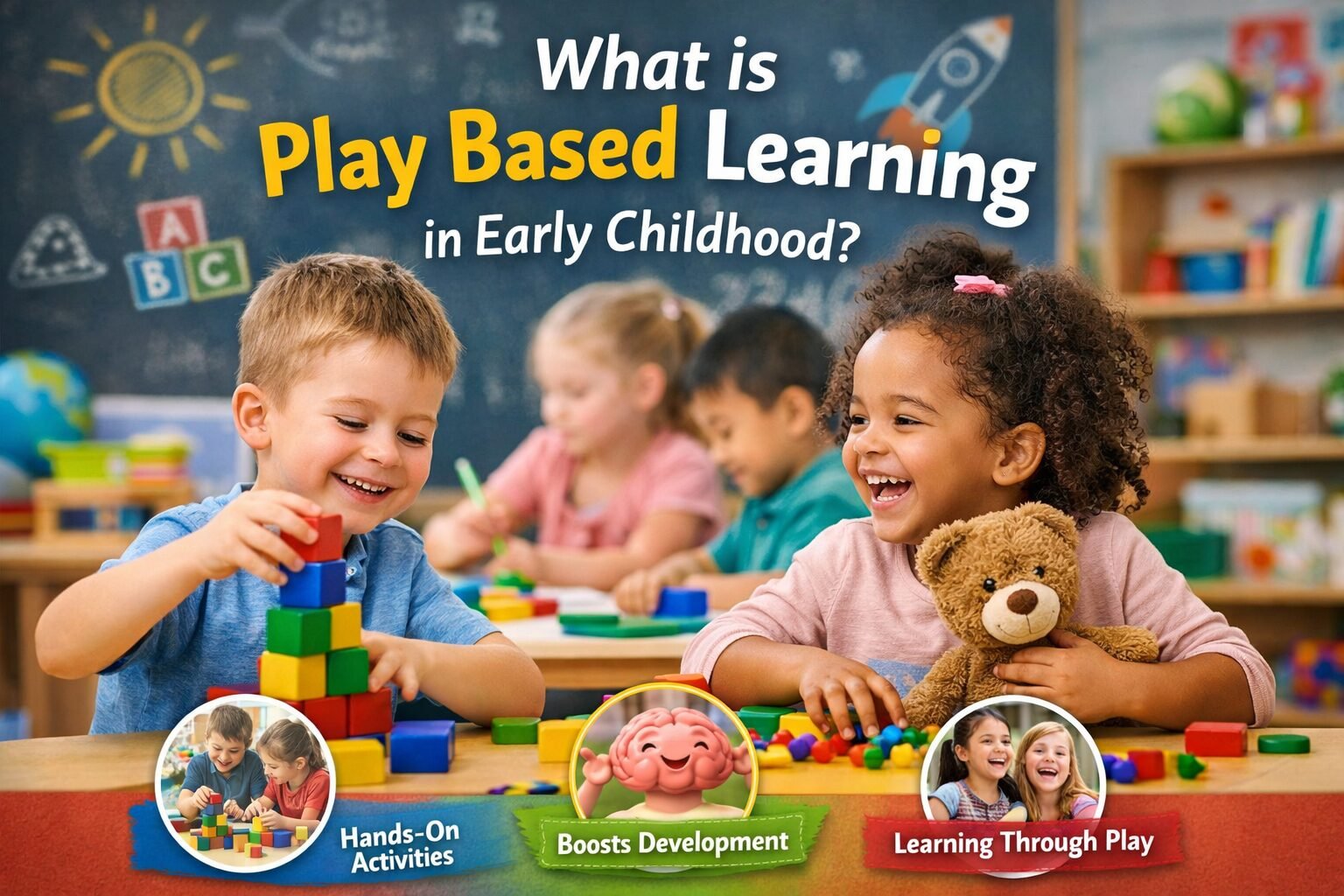

Early childhood is a critical period for cognitive, emotional, and social development. During these formative years, learning through play proves to be far more effective than traditional methods. Play based learning is an educational approach that harnesses the natural curiosity and creativity of children, making learning both engaging and meaningful.
By understanding what is a play based learning approach through frameworks like the Early Years Learning Framework (EYLF), parents and educators can foster holistic growth while ensuring children develop essential life skills.
What is Play Based Learning?
Play based learning definition:
Play based learning is a child-centered educational method where learning occurs through guided or free play activities. It emphasizes exploration, creativity, and hands-on experiences, allowing children to develop skills naturally while enjoying the process.
“Learning through play is not merely fun; it is the foundation of early childhood development.”
Key Features of Play Based Learning:
- Encourages curiosity and exploration
- Fosters social and emotional growth
- Develops problem-solving and critical thinking skills
- Supports physical development and coordination
For a deeper understanding, explore the power of play-based learning in early childhood.
Importance of Play Based Learning in Early Childhood
Play based learning in early childhood has been linked to numerous developmental benefits. Structured play activities stimulate multiple areas of a child’s growth simultaneously.
Benefits of Play Based Learning:
| Domain | Benefits |
| Cognitive | Enhances memory, problem-solving, and creativity |
| Emotional | Builds confidence, resilience, and emotional regulation |
| Social | Encourages teamwork, communication, and empathy |
| Physical | Develops motor skills and hand-eye coordination |
Children who engage in play based learning tend to perform better academically and socially because they learn in a natural, stress-free environment. Learn more about the benefits of early childhood education.
Key Principles of Play Based Learning
- Child-Centered Learning
Children’s interests and choices drive the learning process. Educators observe and facilitate rather than dictate. - Learning Through Exploration
Hands-on activities, experiments, and creative tasks allow children to discover concepts organically. - Role of Teachers and Facilitators
Adults guide and scaffold learning experiences, ensuring challenges are appropriate while fostering independence. - Integration Across Subjects
Play based learning activities often combine math, language, science, and arts naturally, promoting interdisciplinary development.
Types of Play Based Learning Activities
Here are popular play based learning ac tivities that provide children opportunities to explore, experiment, and express themselves:
1. Outdoor Play
- Nature walks and gardening
- Sand and water play
- Physical games like hopscotch or obstacle courses
2. Creative Play
- Arts and crafts
- Music, dance, and role-playing
- Storytelling and dramatic play
3. Cognitive & Problem-Solving Activities
- Building blocks and puzzles
- Simple science experiments
- Sorting and matching games
4. Social & Cooperative Play
- Group activities and team games
- Peer-to-peer teaching exercises
- Collaborative storytelling
Tip: Rotate activities weekly to maintain engagement and stimulate different developmental domains.
How to Implement Play Based Learning at Home or School
Implementing play based learning in early childhood settings doesn’t require expensive tools or elaborate setups. Here’s a simple framework:
- Create a Safe Environment
Ensure spaces allow free movement and safe exploration. - Provide Open-Ended Materials
Items like blocks, clay, or art supplies encourage creativity without strict instructions. - Follow the Child’s Interests
Observe what excites the child and design activities around it. - Encourage Independent and Group Play
Balance solo exploration with cooperative activities to develop social skills. - Incorporate Routine and Structure
While flexibility is key, consistent schedules help children feel secure and confident.
Benefits of Play Based Learning
The benefits of play based learning extend beyond mere fun. Research and real-world examples show positive impacts in multiple domains:
- Academic Growth: Improves literacy, numeracy, and problem-solving skills.
- Social and Emotional Development: Encourages empathy, teamwork, and self-regulation.
- Physical Development: Enhances coordination, balance, and fine motor skills.
- Long-Term Success: Children develop curiosity, creativity, and resilience—skills critical for lifelong learning.
Examples of Play Based Learning
Here are practical examples of play based learning in action:
- Role-Playing Stores or Restaurants: Children practice math, communication, and decision-making.
- Building a Mini Garden: Combines science, responsibility, and creativity.
- Storytelling with Puppets: Enhances language, expression, and social skills.
- Puzzle Challenges: Promotes critical thinking and teamwork.
Learn more about fun activities for growing minds to implement these ideas.
Visual Comparison Table:
| Activity | Skill Developed | Age Group |
| Puppet Storytelling | Language & Social Skills | 3-6 Years |
| Mini Garden | Science & Responsibility | 4-7 Years |
| Building Blocks | Spatial Awareness & Problem-Solving | 2-6 Years |
| Role-Play Store | Math & Communication | 4-6 Years |
Common Misconceptions About Play Based Learning
- Myth 1: Play is “just fun.”
Reality: Every play activity can develop multiple cognitive and social skills. - Myth 2: Structured lessons are more effective.
Reality: Children learn better when they explore concepts at their own pace. - Myth 3: Only young children benefit.
Reality: Play based learning techniques can be adapted for older children to encourage creativity and engagement.
Conclusion
Play based learning is more than just an educational trend it’s a research-backed, developmentally appropriate approach that nurtures the whole child. From fostering creativity and emotional intelligence to developing problem-solving skills, its benefits are undeniable.
By integrating play based learning activities at home and in classrooms, parents and educators can ensure children not only learn effectively but also enjoy the journey. Start small, observe, and gradually expand to create a rich, engaging environment that supports lifelong learning.

