
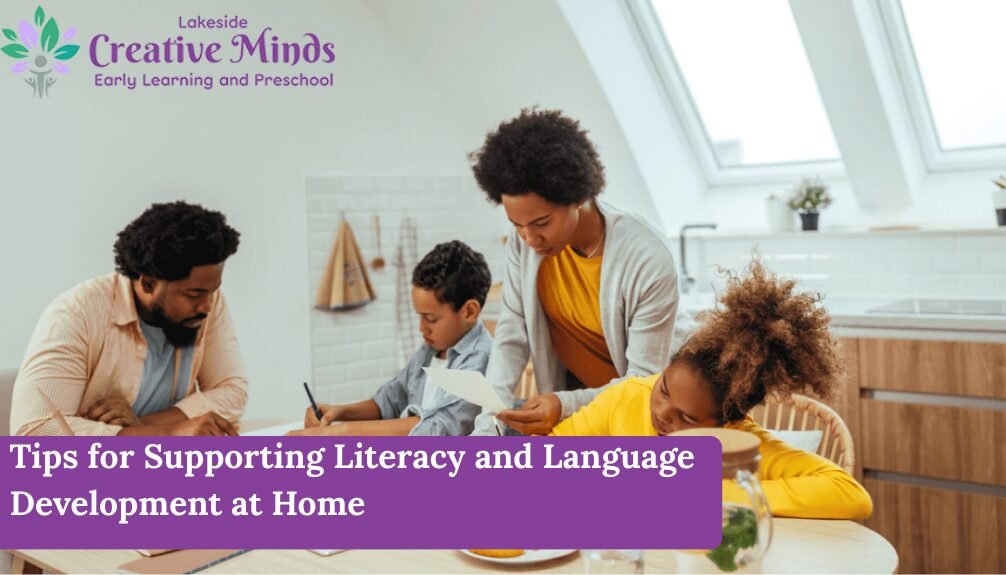

Early literacy development is a critical foundation for a child’s lifelong learning. When children develop strong literacy and language skills from an early age, they are better equipped to communicate, understand the world, and engage in meaningful learning experiences.
Supporting literacy at home doesn’t require a classroom setting or formal lessons; it can be integrated naturally into everyday routines. This guide provides practical strategies for parents to foster early literacy and language skills, aligned with the EYLF communication outcomes, while keeping learning engaging and fun.
It also explores how play-based learning and indoor activities for preschoolers can support child development stages.
Understanding Early Literacy Development
What is Early Literacy?
Early literacy development refers to the skills, knowledge, and attitudes that prepare children for reading and writing. It includes listening, speaking, understanding language, recognizing letters and words, and developing print awareness.
These skills begin to form long before formal schooling starts. For example, when a child listens attentively to a story or attempts to “write” with crayons, they are developing crucial literacy foundations. Incorporating the benefits of play-based learning at home can make these activities even more effective, as children learn while exploring, imagining, and problem-solving.
Why Literacy Matters for Young Children
Literacy is not just about reading and writing. Early literacy development contributes to cognitive growth, social-emotional learning, and problem-solving abilities. Children who engage with books and language early are more likely to excel academically and build confidence in communication.
Connecting these activities to EYLF communication outcomes ensures that literacy experiences support holistic learning. Parents who use structured play and indoor activities for preschoolers often notice improvements in attention span, vocabulary, and social skills, key indicators in child development stages.
Practical Preschool Reading Tips
Reading Aloud Every Day
One of the most effective strategies for fostering early literacy is reading aloud daily. Choose age-appropriate books that are visually engaging and rich in language. Make the experience interactive by using different voices for characters and emphasizing the rhythm of the language.
Daily reading nurtures vocabulary, listening skills, and comprehension. Even just 10–15 minutes a day can make a significant difference over time.
Making Reading Interactive
Encourage children to participate actively in reading sessions. Ask questions such as, “What do you think will happen next?” or “Why do you think the character did that?” This enhances comprehension and develops expressive language skills.
Allow children to “read” parts of the story by repeating phrases or pointing out familiar words. Indoor activities for preschoolers, such as storytelling with puppets or acting out scenes, can make interactive reading even more fun and memorable.
Creating a Print-Rich Environment
Children benefit from seeing letters, words, and books in their daily environment. Label common household items like “door,” “table,” or “refrigerator” with printed words. Place books, magazines, and other reading materials within easy reach.
A print-rich environment fosters curiosity about written language, helps children recognize letters and words, and encourages self-directed learning. Parents choosing services like Family Daycare Raymond Terrace or Five-Star Family Day Care can also integrate these literacy tips in small group learning sessions.
Building Language Skills for Children
Everyday Conversations Count
Language skills develop naturally through conversation. Engage your child in discussions throughout the day, whether during mealtime, playtime, or while running errands. Describe your actions, ask open-ended questions, and expand on their responses to introduce new vocabulary.
For example, if your child says, “I see a dog,” you could expand with, “Yes, that’s a big brown dog wagging its tail happily.” Using language in everyday routines complements the benefits of play-based learning and supports milestones across child development stages.
Storytelling and Role-Playing
Storytelling and imaginative play are powerful tools for language development. Encourage children to create their own stories, act out scenarios, or role-play different characters. This fosters creativity, narrative skills, and expressive language.
Role-playing also helps children practice social interactions, understand perspectives, and use language in varied contexts. For children attending daycare for autism, storytelling and structured role-play can improve communication, social confidence, and understanding of emotions.
Songs, Rhymes, and Word Games
Songs, nursery rhymes, and word games reinforce phonemic awareness, the ability to recognize and manipulate sounds in words. These activities improve memory, listening skills, and pronunciation while making learning enjoyable. Clapping along with syllables, singing alphabet songs, or playing rhyming games introduces foundational literacy skills in a playful, memorable way.
Aligning with EYLF Communication Outcomes
How Home Activities Support EYLF Outcomes
The Early Years Learning Framework (EYLF) emphasizes communication, language, and literacy as key developmental outcomes. Activities like reading, storytelling, and conversation help children meet these outcomes by enhancing their ability to express ideas, understand meaning, and engage with others. Parents can track progress by observing how their child responds to stories, uses new vocabulary, and participates in conversations.
Encouraging Social Interaction Through Literacy
Language development is closely tied to social interaction. Encourage your child to share stories, participate in group reading, or explain what they learned from a book to a family member. These interactions build confidence, reinforce learning, and strengthen social communication skills.
Reading in groups or with siblings can create opportunities for dialogue, turn-taking, and collaborative learning. Parents considering family daycare in Raymond Terrace or Five-Star Family Day Care will find these strategies can easily complement structured group learning and indoor activities.
A Parent Guide to Early Learning at Home
Setting Realistic Goals for Your Child
Each child develops at their own pace, so it’s important to set achievable goals. Focus on small, consistent improvements rather than perfection. Celebrate milestones such as recognizing letters, using new words, or completing a short story.
Recognizing progress boosts motivation and reinforces a positive attitude toward learning. Parents exploring the benefits of Catholic education can also integrate values-based learning alongside literacy activities.
Establishing Consistent Routines
Consistency helps children know what to expect and creates a structured environment for learning. Designate specific times for reading, storytelling, or language games each day. Integrate literacy into daily routines, such as reading a bedtime story, singing songs during bath time, or discussing the day’s events at dinner.
Structured routines make learning habitual and enjoyable. Combining these routines with indoor activities for preschoolers can strengthen their language skills while making learning playful.
Tracking Progress and Adjusting Strategies
Monitor your child’s growth in literacy and language. Note new vocabulary, improved comprehension, or increased confidence in expressing ideas. Adapt strategies to match developmental changes, for example, transition from picture books to simple chapter books, or introduce more complex word games as their skills improve. Flexibility ensures that learning remains challenging and engaging without causing frustration.
Conclusion: Empowering Your Child’s Literacy Journey
Supporting literacy and language development at home doesn’t require complicated lessons or expensive resources. By integrating daily reading, conversation, storytelling, and play, parents can create a rich learning environment that promotes early literacy development.
Whether you are looking for tips alongside daycare for autism, exploring family daycare in Raymond Terrace, or considering the benefits of Catholic education, these strategies can complement professional support and structured learning. Start small, stay consistent, and celebrate progress. Every effort at home and through trusted providers like Lakeside Creative Minds contributes to a child’s literacy journey.

