
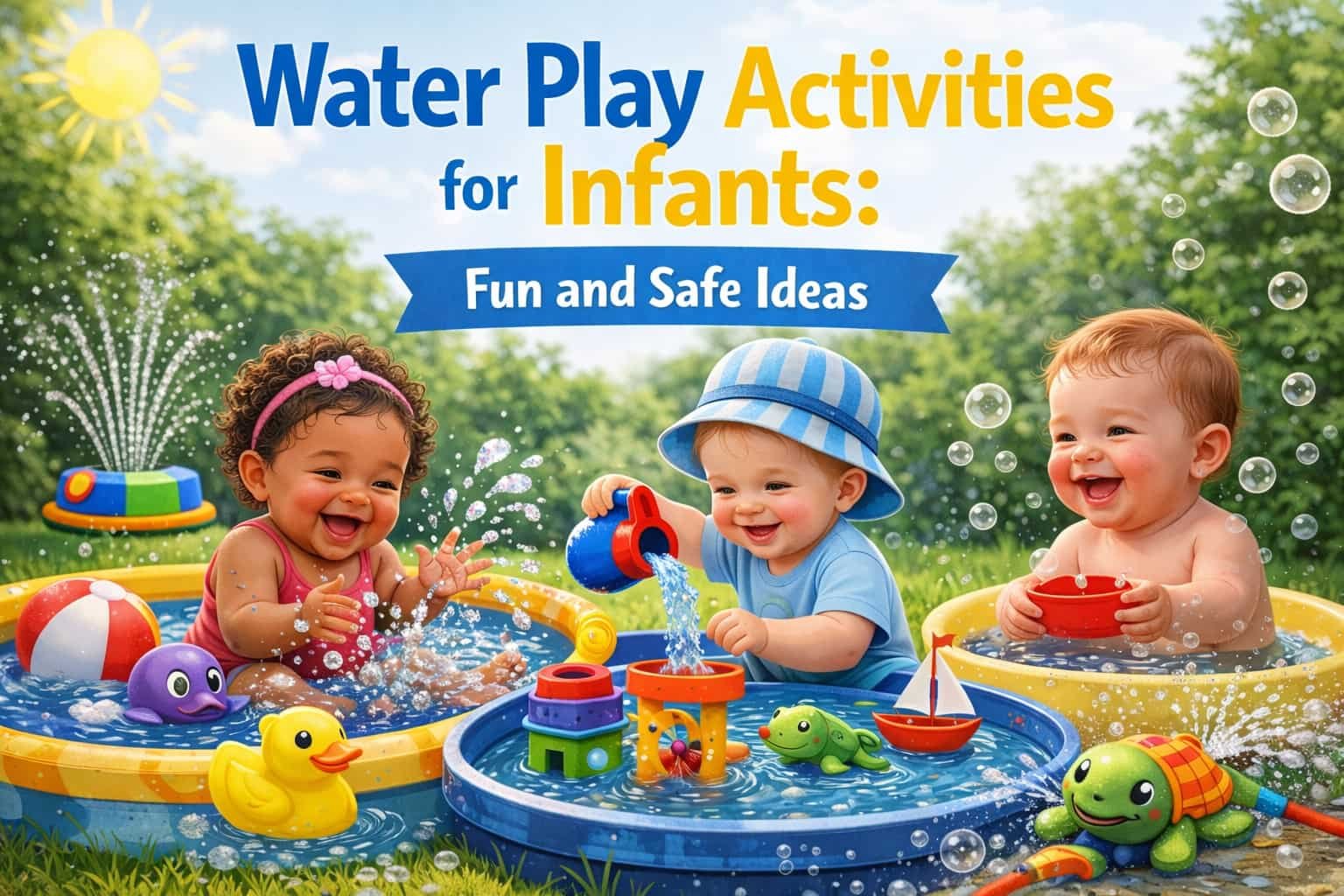

Watching an infant splash in water isn’t just adorable; it’s an essential part of early childhood development. Infant water play activities stimulate the senses, promote motor skills, and foster cognitive growth. From gentle splashes in the bathtub to structured outdoor water games, these activities provide a fun and safe environment for learning and bonding.
Tip: Always supervise water play. Even a few inches of water can be dangerous for babies.
Whether you’re a new parent or a caregiver, understanding the importance of water play and exploring creative ideas can make bath time or outdoor water sessions both educational and fun. Learn more about our infant program for structured activities.
What is Infant Water Play?
Infant water play is any supervised activity where a baby interacts safely with water to explore, learn, and develop new skills. It ranges from casual splashes to structured games using toys or sensory objects.
- Casual Water Play: Simple splashing during bath time.
- Structured Water Play: Using water tables, cups, funnels, and floating toys to teach cause and effect.
Safety First: Never leave a baby unattended, even for a few seconds. Keep water shallow and ensure a non-slip environment.
You can also see how we integrate water-based activities into our early childhood programs for infants and toddlers.
Importance of Water Play for Infants
Water play isn’t just fun, it’s essential for early development. Studies show that babies who engage in regular water play experience enhanced motor, cognitive, and sensory development. Here’s why it matters:
| Benefit | Description | Example Activity |
| Sensory Development | Introduces textures, temperatures, and sounds | Splashing with cups or ice cubes |
| Motor Skills | Strengthens hand-eye coordination and muscle control | Pouring water between cups |
| Cognitive Growth | Teaches cause-and-effect and problem-solving | Using funnels and water wheels |
| Emotional Bonding | Promotes confidence and parent-child interaction | Bath time play with toys |
Fun Fact: Even a few minutes of water play can significantly enhance a baby’s sensory perception and motor coordination.
You can find more about how we support infants’ development at Lakeside Creative Minds.
Top Benefits of Water Play for Babies
Understanding the benefits of water play matters can help you integrate it safely and effectively into your baby’s routine.
1. Physical Development
- Improves muscle strength through movement.
- Encourages balance and coordination as babies reach, grab, and splash.
- Supports gross motor skills in early crawling and standing stages.
Learn more about our infant program and the activities designed to support these skills.
2. Cognitive Growth
- Learning cause and effect by observing water movement.
- Problem-solving skills through pouring, filling, and experimenting with water toys.
- Encourages exploration and curiosity in a safe environment.
Check our guide on play-based learning for more cognitive development ideas.
3. Sensory Stimulation
- Water textures, temperatures, and sounds enhance sensory integration.
- Activities like ice cube exploration or floating toys make babies aware of differences in density, motion, and temperature.
4. Emotional and Social Development
- Builds confidence as babies explore independently.
- Enhances bonding during parent-guided play.
- Provides a calming effect that can reduce fussiness.
Pro Tip: Introduce water play gradually. Start with small splashes and simple toys before moving to structured activities.
Fun and Safe Water Play Activities for Infants
Here’s a list of engaging, developmentally appropriate water activities for infants, with safety tips included.
1. Bath Time Exploration
- Add floating toys, cups, or soft sponges.
- Encourage pouring and scooping to teach cause and effect.
- Keep water warm and shallow (2–3 inches).
Learn how our trusted infant care programs incorporate fun bath time activities.
2. Water Table Fun
- Perfect for sensory learning and fine motor skills.
- Include funnels, cups, or floating toys for experimentation.
- Place the table on a non-slip surface outdoors.
3. Sprinkler or Shallow Pool Play
- Outdoor water fun under supervision.
- Use gentle sprinklers or a shallow pool.
- Ensure sun protection and hydration during play.
Check out our family day care programs for outdoor learning ideas.
4. Sensory Bottles or Cups
- Fill bottles with water, glitter, or safe small toys.
- Let babies shake, roll, and explore with zero mess.
- Great for indoor sensory play.
5. Ice Cube Exploration
- Encourage tactile learning and temperature recognition.
- Supervise to prevent choking hazards.
Checklist: Always keep a towel, toys, and a clean water source nearby to make play smooth and safe.
Safety Guidelines for Infant Water Play
Safety should be your top priority. Follow these tips:
- Never leave infants unattended.
- Keep water shallow (no more than 3 inches).
- Check water temperature before each session.
- Avoid slippery surfaces with bath mats or splash pads.
- Use non-toxic, baby-safe toys only.
- Supervise outdoor activities and use sun protection.
Important: Even a few inches of water can be dangerous, vigilant supervision is essential.
How Often Should Infants Play with Water?
- Frequency: 5–15 minutes daily is sufficient for sensory stimulation and bonding.
- Balance: Combine with tummy time, reading, or other developmental play.
- Cues: Stop if the baby shows discomfort, tiredness, or coldness.
Check our infant program schedule for more guidance.
Tools and Products to Enhance Water Play
- Water Tables: Adjustable height, shallow and safe for indoor/outdoor use.
- Floating Toys: Rubber ducks, boats, foam shapes.
- Funnels and Cups: Promote pouring, experimentation, and problem-solving.
- Splash Pads or Mats: Prevent slipping and provide comfort.
| Product | Purpose | Age Range |
| Water Table | Structured sensory play | 6–24 months |
| Floating Toys | Hand-eye coordination | 3–24 months |
| Funnels & Cups | Cause-and-effect learning | 3–12 months |
| Ice Cube Tray | Tactile & temperature exploration | 6–12 months |
Explore our infant care programs to see these tools in action.
Conclusion
Water play is a joyful, educational, and safe activity for infants. By incorporating fun and safe water play activities, you can help your baby develop motor skills, sensory awareness, cognitive growth, and emotional bonding, all while having fun!
Try these water play activities today and share your baby’s favorite splash moment in the comments below!
FAQ
Q: Can infants play in water safely?
Yes! Supervised shallow water play with safe toys is both safe and beneficial.
Q: What are the best water play activities for babies?
Bath play, water tables, sprinklers, sensory bottles, and ice cube exploration are ideal.
Q: How does water play benefit my baby’s development?
Water play enhances motor skills, sensory stimulation, cognitive growth, and emotional bonding. Learn more in our infant program.
Q: At what age can babies start water play?
Infants as young as 3–6 months can enjoy supervised water play activities.

