
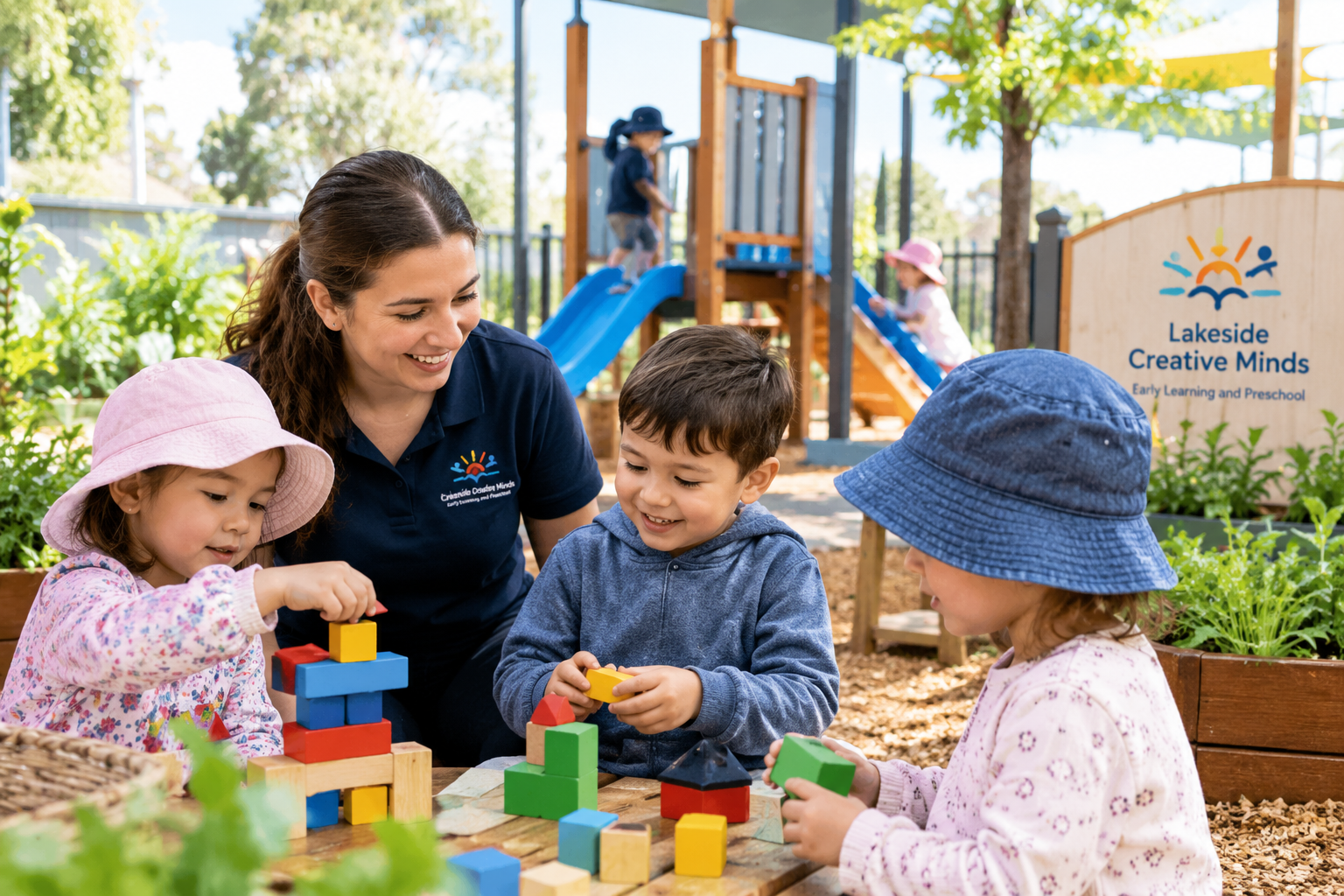

When your child is laughing with friends, climbing on the playground, rushing to their favourite activity, or simply sitting quietly, you may not think about everything happening around them to keep their day safe.
A Childcare Safety and Supervision Policy plays an important role in making sure your child can enjoy these everyday moments while educators stay alert, present, and ready to respond when needed.
Safety is not about holding your child back from play. It is about giving your child the confidence to participate, make choices, and enjoy new experiences while having the right support close by.
How Does Safety Become Part of Your Child’s Everyday Routine?
Safety is not limited to preventing accidents. It can also involve knowing where your child is, understanding what they are doing, and responding when they need support.
Think about your child building with blocks. You want enough freedom for your child to make choices, test ideas, and use their imagination, while still having attentive adults nearby. The same balance matters when your child is running outdoors, joining a group activity or moving between different areas.
At Lakeside Creative Minds Early Learning and Preschool, individual attention is part of the centre’s approach. The centre describes itself as a 39-place setting that operates at a low ratio to focus on each child’s needs.
How Can Active Supervision Support Your Child?
Supervision means more than simply being in the same room as your child.
You can think of active supervision as a combination of watching, listening, positioning, and responding. When your child moves from one activity to another, attentive educators can stay aware of what is happening around them and step in when support is needed.
For example, your child might be using outdoor equipment while another child is nearby. Good supervision gives your child room to participate while an educator remains attentive to movement, interactions, and potential risks.
This approach can help your child enjoy physical activity without making every experience feel restricted.
Why Does the Learning Environment Matter?
Your child’s surroundings can influence how safely they move, play, and learn.
A well-planned environment gives your child clear areas for different experiences while helping educators maintain awareness of what is happening. Lakeside Creative Minds provides indoor learning spaces and a large outdoor area, alongside areas designed for activities such as construction, creativity, books, numeracy and puzzles.
You may notice that your child can move between activities while still having access to spaces suited to different interests and abilities.
How Can Safety Support Learning Through Play?
Your child does not need to avoid every challenge to stay safe.
You can give your child opportunities to climb, build, carry, balance, create and solve problems while having appropriate support nearby. These experiences can help your child practise judgement and become more aware of how their actions affect themselves and others.
Imagine your child trying to build a tall structure. It may fall several times. Rather than immediately taking over, an educator can give your child time to think, provide help when needed, and remain aware of the surrounding environment.
That balance between independence and attentive support can make everyday learning meaningful.
What Role Do Educators Play in Your Child’s Safety?
Your child’s educators have an important role in creating a caring and responsive environment.
This means your child’s wellbeing can remain connected to everyday learning rather than being treated as something separate.
You can also benefit from open communication with educators when you want to understand how your child is settling into routines, interacting with others or responding to new experiences.
How Can Safety and Independence Work Together?
You may sometimes wonder whether close supervision limits your child’s independence.
It does not have to.
Your child can learn to make choices, manage belongings, follow routines, and attempt age-appropriate tasks while receiving support when necessary. You can give your child room to try while knowing that attentive adults are nearby.
At Lakeside Creative Minds Early Learning and Preschool, your child can be supported in developing independence through everyday routines, play experiences, and age-appropriate responsibilities in a caring environment.
For example, your child might choose between two activities, put materials away after playing, or attempt a new physical challenge. Each experience can build a sense of responsibility while allowing your child to practise safe decision-making.
How Can You Ask About Safety Before Enrolment?
You can ask practical questions before choosing a childcare setting.
Ask how supervision works indoors and outdoors, how educators support children during transitions, how safety concerns are communicated to families, and how your child’s individual needs are considered.
You can also pay attention to how educators interact with children during a visit. Do they listen? Do they respond calmly? Do they know what the children are doing? Do you feel comfortable asking questions?
These small observations can tell you a lot about the care your child may receive.
Frequently Asked Questions
1. What is a childcare safety and supervision policy?
It provides guidance for keeping children appropriately supervised and supporting safe practices throughout daily childcare activities.
2. Why is supervision important during outdoor play?
Outdoor play gives your child opportunities to move, experiment, and develop physical skills. Attentive supervision allows your child to participate while educators remain aware of safety and interactions.
3. Does supervision stop your child from becoming independent?
No. Appropriate supervision can give your child room to make choices and attempt tasks while providing help when it is needed.
4. What should you ask a childcare centre about safety?
You can ask about supervision, indoor and outdoor routines, transitions, educator communication, individual needs, and how incidents or concerns are communicated with you.
5. How can you tell whether a childcare environment feels safe?
You can observe the environment, notice how educators interact with children, and ask how daily supervision works. Your own comfort with the setting also matters.
6. Why does the physical environment matter for safety?
Your child needs spaces where they can participate in age-appropriate activities while educators can remain aware of what is happening. Purposeful indoor and outdoor areas can support both learning and safe participation.

