
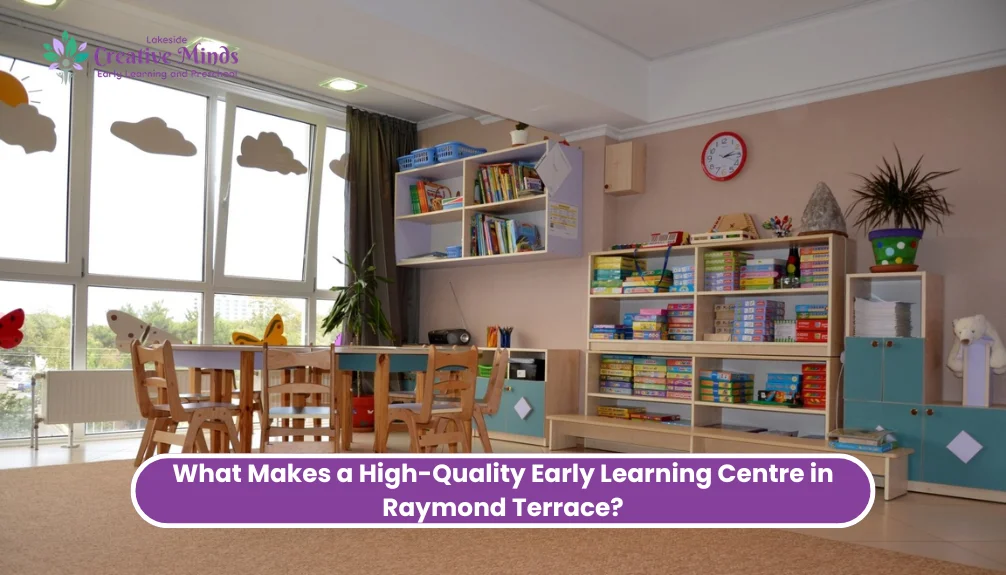

Choosing an early learning centre is one of the most important decisions parents make during their child’s early years. While location and convenience often play a role, the quality of care, education, and support provided by a centre can have a lasting impact on a child’s development.
For families exploring early learning in Raymond Terrace or researching preschool Raymond Terrace options, understanding what separates a high-quality centre from an average one can help make the decision easier.
A quality early learning environment does more than supervise children. It supports their emotional wellbeing, encourages curiosity, builds confidence, and lays the foundation for future learning.
So, what should parents look for when evaluating an early learning centre?
Why Quality Early Learning Matters
The first five years of life are a period of remarkable growth and development.
During this time, children are developing:
- Language and communication skills
- Social and emotional understanding
- Problem-solving abilities
- Physical coordination
- Independence and confidence
Research consistently shows that positive early learning experiences can contribute to better educational outcomes, stronger social skills, and increased confidence later in life.
This is why choosing a high-quality early learning centre is about much more than childcare; it’s about supporting your child’s future development.
Qualified and Caring Educators Make the Difference
One of the strongest indicators of a quality early learning centre is its team of educators.
Children learn best when they feel safe, respected, and supported by trusted adults.
Experienced educators help children:
- Build confidence
- Develop communication skills
- Navigate social situations
- Explore new ideas
- Feel secure in their environment
While qualifications are important, parents should also look for educators who demonstrate warmth, patience, and genuine care for each child.
When visiting a centre, observe how educators interact with children. Positive, respectful relationships are often a sign of a strong learning environment.
A Strong Play-Based Learning Approach
Modern early childhood education recognises that children learn best through play.
High-quality early learning Raymond Terrace programs use play-based experiences to encourage development across multiple areas.
Children learn valuable skills through activities such as:
- Building and construction play
- Storytelling and reading
- Music and movement
- Creative arts
- Outdoor exploration
- Group games and collaborative activities
For example, a simple block-building activity may help children develop problem-solving, communication, creativity, and early mathematical thinking all at once.
Play-based learning allows children to learn naturally while remaining engaged and motivated.
Safe, Secure, and Welcoming Environments
Safety is a key consideration for every family.
A quality early learning centre should provide:
Physical Safety
- Secure entry and exit procedures
- Clean and hygienic learning spaces
- Age-appropriate equipment
- Well-maintained outdoor play areas
Emotional Safety
Children should feel:
- Welcome
- Respected
- Included
- Comfortable expressing themselves
A nurturing environment helps children develop confidence and encourages them to participate in learning experiences.
When children feel emotionally secure, they are more willing to explore, ask questions, and build relationships.
Individualised Learning and Development
Every child develops at their own pace.
High-quality centres recognise that children have different interests, strengths, and learning styles.
Rather than expecting every child to follow the same path, educators tailor experiences to support individual development.
This may involve:
- Following children’s interests
- Providing additional support where needed
- Encouraging personal strengths
- Creating flexible learning opportunities
Families often appreciate centres that take the time to understand their child as an individual rather than treating every child the same.
School Readiness Without Academic Pressure
One of the reasons many parents seek preschool Raymond Terrace programs is to help prepare their children for school.
However, quality school readiness programs focus on developing foundational skills rather than formal academic instruction.
Children build:
- Independence
- Confidence
- Listening skills
- Emotional resilience
- Communication abilities
- Early literacy and numeracy awareness
These skills help children transition into school successfully while maintaining a positive attitude toward learning.
School readiness should feel natural, engaging, and age-appropriate.
Strong Partnerships with Families
The best early learning centres understand that parents are a child’s first and most important teachers.
Quality centres actively encourage family involvement and maintain open communication.
This may include:
- Daily updates
- Parent meetings
- Learning progress discussions
- Family events
- Opportunities for feedback
When educators and families work together, children receive more consistent support and benefit from stronger learning outcomes.
For many Raymond Terrace families, this partnership is one of the most valuable aspects of a quality early learning experience.
Outdoor Learning and Exploration
Outdoor play is an important part of early childhood development.
A high-quality centre provides opportunities for children to:
- Explore nature
- Develop physical skills
- Build confidence
- Engage in imaginative play
- Learn about the environment
Outdoor learning experiences encourage curiosity and support children’s overall wellbeing.
In a community like Raymond Terrace, access to outdoor spaces can play a valuable role in creating engaging learning experiences for young children.
Positive Social Development Opportunities
One of the greatest benefits of early learning is the opportunity for children to interact with others.
Through daily experiences, children learn how to:
- Share
- Cooperate
- Take turns
- Resolve conflicts
- Build friendships
These social skills are essential for future success both inside and outside the classroom.
A quality centre intentionally supports social development through guided interactions and group learning experiences.
Signs You’ve Found a High-Quality Early Learning Centre
As you visit centres, look for signs such as:
Children appear happy and engaged
Educators communicate warmly and respectfully
Learning experiences are varied and age-appropriate
The environment is clean and organised
Families are welcomed and involved
Safety procedures are clearly followed
Children’s interests are reflected in activities
These indicators often reveal the overall quality of the learning environment.
Supporting Families in Raymond Terrace
Families searching for early learning Raymond Terrace and preschool Raymond Terrace services are often looking for a place where children feel supported, encouraged, and inspired to learn.
A high-quality early learning centre provides more than education. It creates a community where children can develop confidence, build relationships, and establish a strong foundation for lifelong learning.
By focusing on safety, play-based learning, qualified educators, and family partnerships, centres can help children thrive during their most important developmental years.
Final Thoughts
A high-quality early learning centre nurtures the whole child, socially, emotionally, physically, and cognitively.
For families in Raymond Terrace, choosing the right early learning environment means finding a place where children feel safe, valued, and excited to learn each day.
When evaluating your options, focus on educator quality, learning approaches, safety practices, family communication, and school readiness support.
The right early learning centre, like Lakeside Creative Minds, can make a meaningful difference in your child’s confidence, development, and future success.
Frequently Asked Questions
1. What makes an early learning centre high quality?
A high-quality centre provides qualified educators, play-based learning, safe environments, strong family communication, and support for each child’s development.
2. Why is play-based learning important?
Play-based learning helps children develop social, emotional, language, and problem-solving skills through engaging and meaningful experiences.
3. How does early learning support school readiness?
Early learning programs build confidence, independence, communication skills, emotional resilience, and early literacy and numeracy awareness.
4. What should I look for when visiting a preschool in Raymond Terrace?
Observe educator interactions, safety measures, learning activities, communication practices, and whether children appear engaged and comfortable.
5. Why are qualified educators important in early childhood education?
Qualified educators understand child development and create supportive learning environments that help children grow and thrive.

