
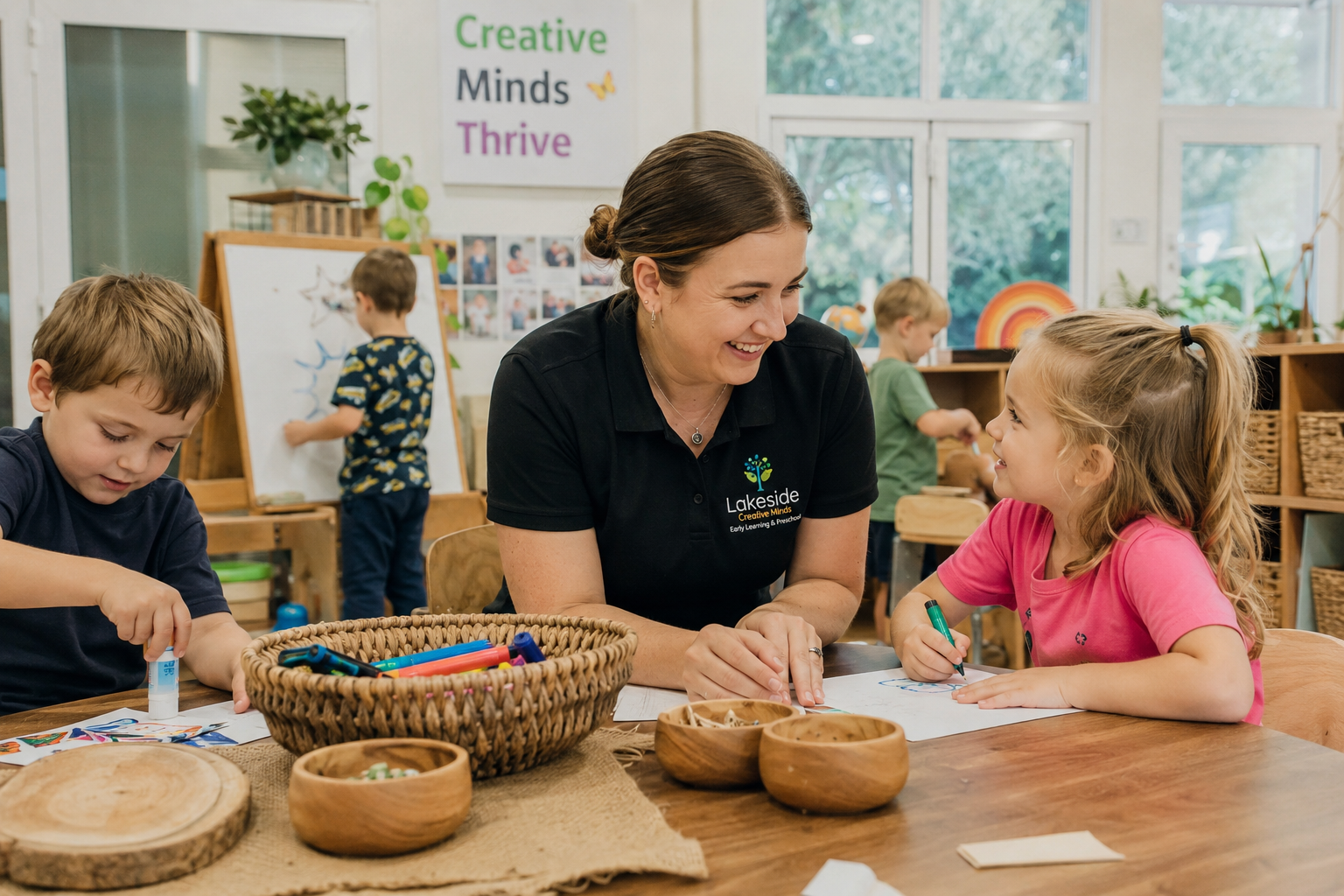

You may notice that your child wants to do more things without your help, from putting toys away to carrying their own belongings. A Kindergarten program in Raymond Terrace can give your child regular opportunities to practise these small responsibilities through everyday routines, play, and guided learning.
How Can Small Tasks Help Your Child Feel Capable?
Your child can learn a lot from tasks that may seem ordinary to you.
Putting materials away after an activity, choosing a book, collecting belongings or helping prepare a learning space can give your child a chance to take part rather than simply watching an adult do everything.
When you allow your child to have a go, you give your child room to practise.
How Can Daily Routines Encourage Independence?
Your child can learn responsibility through repetition.
A familiar routine might involve choosing where to begin, gathering the materials needed for an activity, and helping return items afterwards. When your child experiences the same type of task regularly, the steps can become easier to remember.
You do not need to expect your child to complete everything perfectly. The important part is having a chance to participate.
How Can Educators Give Your Child the Right Amount of Help?
Your child may sometimes ask for help before trying a task independently.
A supportive educator can give your child a moment to attempt the task first, offer a simple prompt, and step in when genuine assistance is needed. This can help your child experience the satisfaction of completing something that initially felt difficult.
For example, instead of immediately putting away your child’s materials, an educator might encourage your child to return one item first.
How Can Play Help Your Child Take Ownership?
Your child can practise responsibility naturally during play.
When your child builds a structure, creates artwork or takes part in pretend play, your child can make decisions about materials, roles and what happens next. Your child can also learn that taking care of shared resources is part of being involved.
How Can Your Child Make Simple Choices?
Ownership begins with having a genuine role in small decisions.
Your child might choose between two activities, select materials for a creative project or decide where to place a finished piece of work. These choices do not need to be complicated.
Giving your child manageable options can help your child understand that their decisions have a place within the daily learning experience.
Why Should You Avoid Doing Every Task for Your Child?
It can sometimes feel quicker to do a task yourself.
You may be able to pack away materials, put on shoes, or organise belongings much faster. However, when you allow your child to attempt age-appropriate tasks, your child gets valuable practice.
A slower attempt today can help your child become more capable tomorrow.
How Can Small Responsibilities Build Problem-Solving Skills?
Your child may encounter little problems while completing everyday tasks.
A box may be too full to close. A puzzle piece may not fit. Several items may need to be carried at once. Instead of immediately solving the problem, you can give your child time to think about what might work.
Simple prompts such as “What could you try?” can encourage your child to consider another approach.
How Can Your Child Learn to Care for Shared Spaces?
Taking ownership is not only about personal belongings.
Your child can learn that shared spaces and materials also need care. Returning books to their place, placing art materials where they belong, or helping tidy a play area can introduce your child to the idea that their actions affect other people.
These small responsibilities can become meaningful parts of your child’s day.
How Can You Support These Skills at Home?
You can continue the same approach through ordinary tasks at home.
Your child might place dirty clothes in a basket, help put away groceries, carry a lightweight item, or return a favourite toy after play. You can choose tasks that suit your child’s abilities and give your child enough time to complete them.
You do not need to turn every household activity into a lesson. Everyday participation is enough.
How Can Encouragement Help Your Child Keep Trying?
Your child may not complete a task perfectly the first time.
Instead of focusing only on the finished result, you can notice the effort your child makes. A simple comment such as “You kept trying until you worked it out” can help your child recognise their own progress.
At Lakeside Creative Minds Early Learning and Preschool, your child can receive encouragement to keep trying and take part in everyday tasks at a comfortable pace.
Your child can gradually learn that making an attempt matters, even when the result is not perfect.
FAQs
1. What small tasks can help your child develop independence?
Your child can practise by putting away toys, carrying belongings, choosing materials, helping tidy spaces and completing simple routines suited to their abilities.
2. How can a kindergarten program support your child’s independence?
Your child can take part in everyday routines and play-based experiences where you can practise making choices, caring for materials and completing simple responsibilities.
3. Should you let your child struggle with a task?
You can give your child reasonable time to try before stepping in. If the task becomes too difficult, you can offer a small prompt or appropriate help.
4. Can play help your child take ownership?
Yes. During play, your child can make decisions, choose materials, organise activities and take responsibility for parts of the experience.
5. How can you encourage your child to complete tasks at home?
You can give your child simple age-appropriate responsibilities and allow enough time for your child to complete them without rushing to take over.
6. Why are small responsibilities important before school?
Small responsibilities can give your child practice with following routines, making choices, caring for belongings, and taking an active role in everyday experiences.

