
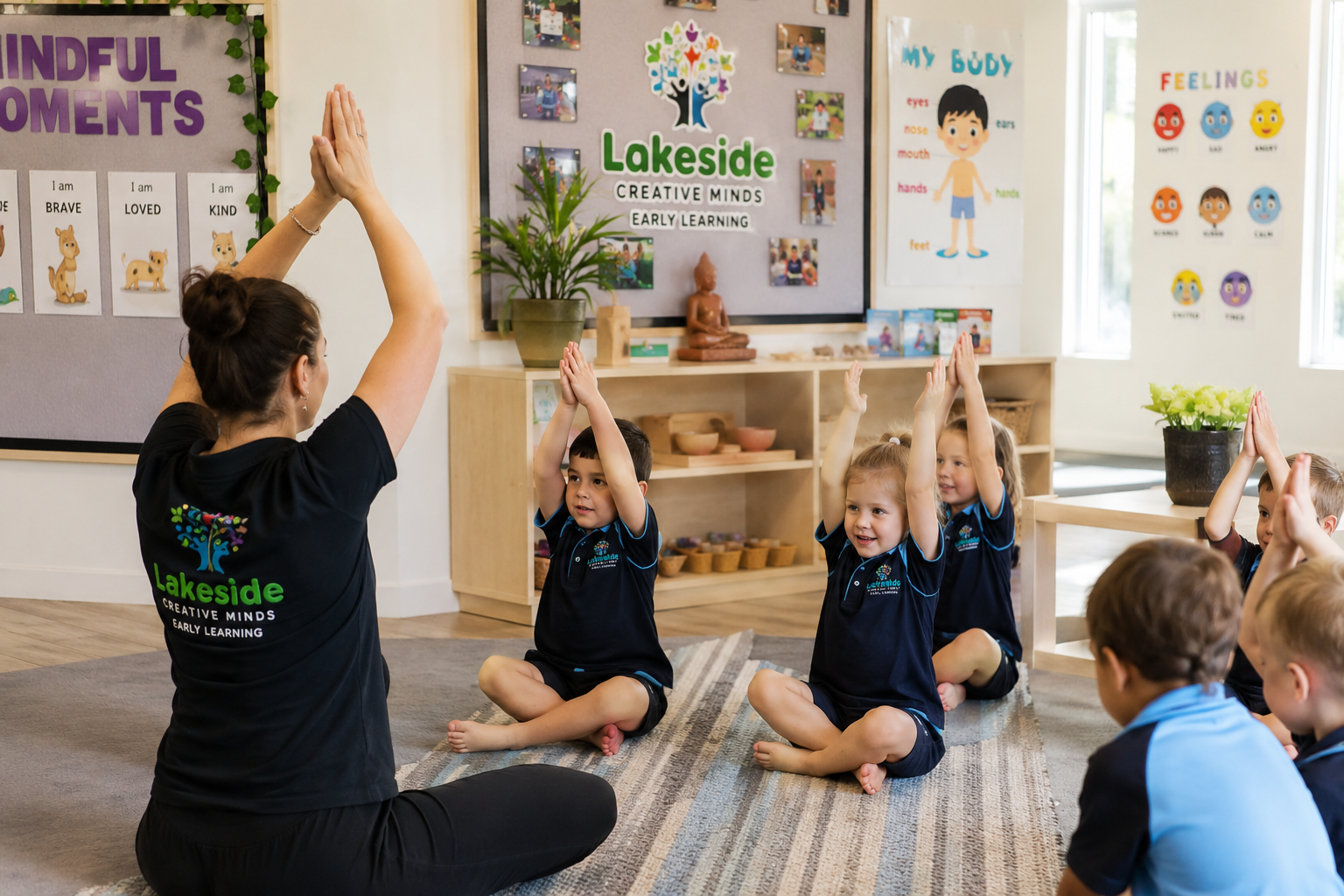

Your child can learn through movement, play, music, and simple moments of calm throughout the day. Yoga lessons can give your child a playful way to move their body, practise balance, build confidence, and enjoy quiet moments while learning alongside others.
At Lakeside Creative Minds Early Learning and Preschool, yoga and stretching form part of a broader early learning experience that considers your child’s physical, emotional, social, and learning needs. The centre’s approach is guided by the Early Years Learning Framework (EYLF), with wellbeing forming one of its five learning outcomes.
Why Can Movement Matter in Your Child’s Early Years?
Your child spends much of the early years learning through physical experiences. Running, jumping, climbing, stretching, balancing, and dancing all give your child opportunities to understand what their body can do.
A simple yoga activity can add another dimension to that learning.
You might see your child copy an animal pose, hold a balance for a few seconds, or take a slow breath before moving into another position. These small activities can encourage body awareness while keeping learning playful.
There is no need for your child to perform a perfect pose. The value comes from taking part, trying something new, and enjoying movement.
How Can Yoga Feel Like Play Rather Than a Lesson?
Animal Poses Can Capture Your Child’s Imagination
Your child may find it much easier to participate when an activity feels like a game.
A pretend cat stretch, butterfly movement, or tall tree pose can turn a few simple movements into imaginative play. Your child can copy the educator, make animal sounds, or create a little movement story with friends.
This approach fits naturally with a play-based early learning environment, where everyday experiences can support learning without making your child feel like they are sitting through a formal class.
Music Can Give Movement a Natural Rhythm
You can also connect stretching with songs, clapping, or gentle music.
Your child may stretch when the music begins, freeze when it stops, or move slowly during a quieter song. These activities can support listening, following simple instructions, and participating in a shared group experience.
That makes movement part of the social side of early learning too.
How Can Yoga Support Your Child’s Wellbeing?
Your child’s wellbeing is about more than physical activity.
For example, after energetic outdoor play, your child might sit comfortably, take a slow breath, and stretch their arms before returning to another activity.
The Lakeside Creative Minds approach places strong attention on wellbeing and provides both active spaces and quieter areas where children can choose different ways to engage with their day.
What Can Your Child Learn Through Simple Yoga Activities?
Balance and Body Awareness
When your child stands on one foot or moves slowly between positions, they practise balance and coordination.
You may notice these skills appearing in everyday moments too, such as climbing playground equipment, putting on shoes, or moving carefully around other children.
Confidence Through Small Achievements
Your child might struggle with a movement at first.
Then one day, they manage to hold the position for a little longer.
That small success can give your child a reason to feel proud. Instead of focusing on getting everything right, your child learns that practising can be enjoyable.
Learning to Participate With Others
Group movement can also teach your child about personal space, turn-taking, listening, and respecting other children.
You can see how a simple activity can connect physical development with communication and social learning.
How Does Yoga Fit Into the Lakeside Creative Minds Approach?
Lakeside Creative Minds Early Learning and Preschool uses the EYLF as a foundation for planning learning experiences around identity, community, wellbeing, learning, and communication.
That means an activity such as stretching does not have to stand alone.
Your child can move, communicate with friends, listen to an educator, practise a physical skill, and experience a sense of accomplishment within the same activity.
The centre also provides tailored learning programs, hands-on experiences, creative areas, STEAM learning, cooking activities, sustainability experiences, and a large outdoor space.
Yoga can therefore sit naturally alongside the other experiences your child encounters throughout the week.
How Can You Make Yoga Enjoyable at Home?
You do not need special equipment or a long routine.
You can place a towel or mat on the floor and invite your child to copy three simple movements. You could pretend to be a tree, stretch like a cat, or sit quietly while taking two slow breaths.
Keep the activity short.
If your child starts giggling, moves in their own way, or decides to try something completely different, that’s perfectly fine. You don’t need to turn it into a strict routine. Give your child the freedom to enjoy the moment, have fun with movement, and gradually become more comfortable noticing how their body feels.
FAQs
1. Is yoga suitable for young children?
Yes. Simple, age-appropriate movements can make yoga a playful physical activity for young children. Activities should always match your child’s abilities and comfort level.
2. Does your child need to know yoga poses?
No. Your child can participate by copying simple movements, stretching, balancing, breathing, and joining in playful activities.
3. Can yoga help your child with confidence?
Small physical challenges can give your child opportunities to practise, succeed, and feel proud of their efforts.
4. Can yoga support your child’s wellbeing?
Gentle movement and quiet breathing can provide moments for your child to slow down after energetic activities and become more aware of how they feel.
5. Can yoga support social learning?
Yes. Group activities can give your child opportunities to listen, follow instructions, respect personal space, and participate alongside other children.
6. Does yoga need to be a long activity?
No. A few simple movements can be enough for a young child. Short, enjoyable activities can work well within a busy early learning day.

