

Starting big school is a milestone that brings excitement and a few nerves for every family. When we prepare children for primary school through small, steady routines at home, the whole transition feels calmer for everyone involved. This guide shares practical, everyday ways to build the habits and confidence your child needs, without turning your living room into a classroom.
Why Does a Daily Rhythm Matter More Than a Big Checklist?
It is easy to feel pressured to tick off a long list of academic milestones before the first day of term. In reality, what helps most is a predictable rhythm your child can count on. A simple morning and afternoon pattern, often repeated, teaches sequencing and patience far better than a single big lesson ever could.
Young children thrive on repetition. When breakfast, dressing, and a quick tidy-up happen in roughly the same order each day, children begin to anticipate what comes next. That sense of “I know what happens now” is exactly what a classroom day asks of them later.
Building a Simple Morning Sequence
A steady morning routine does not need to be complicated. Try keeping the order the same each day, so your child can begin to lead parts of it.
- Wake up, get dressed, and put your pajamas away.
- Eat breakfast at the table, not on the run.
- Brush teeth and pack a small bag together.
- A short, calm moment (a song, a stretch, or a quiet chat) before heading out.
Families often ask us when to start. The honest answer is that small steps taken throughout the year before school achieve far more than a rushed effort in January. If your goal is to prepare children for primary school without stress, aim for consistency over intensity, and let routines grow naturally as your child gets older.
School Readiness Activities You Can Do at Home
To develop real skills, worksheets and flashcards are not necessary. Some of the best school readiness exercises take place on the floor of the living room, in the garden, or in the kitchen.
Try weaving these into your week:
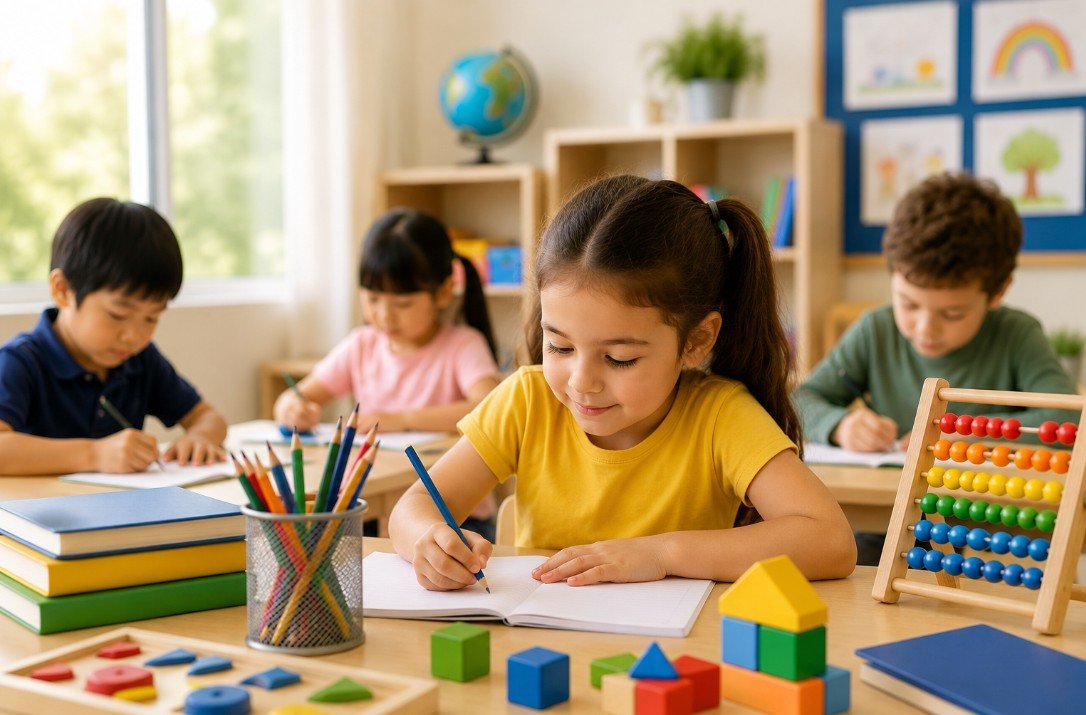
- Short table-time tasks of ten to fifteen minutes, such as threading beads, cutting paper shapes, or matching cards.
- Simple counting games during everyday moments, like counting stairs or setting the table.
- Storytime with pauses where your child predicts what happens next.
- Drawing, coloring, or tracing letters using thick pencils or crayons to build hand strength.
Keeping these sessions short is important. A five- to ten-minute burst of focused attention, often repeated, builds far more stamina than one long session that ends in tears.
Turn-taking games are another quiet yet powerful tool. Snap, memory matching, or simple board games teach children to wait their turn, follow rules, and cope with not always winning, all skills that matter as much as knowing the alphabet on day one.
Everyday Fine Motor Practice
Fine motor strength underpins much of the primary school day, from holding a pencil to opening a lunchbox. Everyday household tasks build this strength without feeling like “work” at all.
- Using child-safe scissors to cut shapes from old magazines.
- Spreading butter or jam on toast with a butter knife.
- Peeling stickers and placing them inside a drawn outline.
- Using tongs or tweezers to sort small objects like pom-poms or buttons.
None of these tasks needs to be perfect on the first try. The goal is simply repeated, low-pressure practice, which is ultimately the most reliable way to prepare children for primary school life without turning home into an extension of the classroom.
Supporting Independence Before the First Day
One of the biggest shifts in primary school is that children are expected to handle small tasks independently. Building this independence gradually at home eases the pressure during the first weeks of term.
Packing and unpacking a school bag is a great place to start. Let your child practice zipping the bag, finding their drink bottle, and putting their hat in the same spot each time. Managing a lunchbox independently, including opening containers and packages, is a skill worth practicing well before term starts, since school days move quickly and there is little time for adult help at lunch.
Getting dressed, including buttoning, zipping, and putting on shoes, is another area where a little daily practice pays off. Choosing an outfit the night before and having your child dress themselves in the morning, although it takes a few extra minutes, builds real confidence.
Easing the Kindergarten to Primary School Transition
The transition from kindergarten to primary school can feel like a big leap, especially when it involves separation and new social settings. Talking openly and calmly about what the day will look like helps children feel prepared rather than caught off guard.
Role-playing parts of the school day at home can ease many nerves. Practicing sitting on the floor for a story, lining up before moving to another area, or asking a teacher for help can turn unfamiliar moments into ones your child has already rehearsed.
At Lakeside Creative Minds, we spend the year before school gently building these routines into daily play, so the jump to term one feels familiar rather than overwhelming. Children who have had regular practice with turn-taking, listening, and simple self-help tasks tend to settle into new routines much more easily.
Early Literacy and Numeracy Through Everyday Conversation
Children absorb an enormous amount of language and number sense through everyday conversation, long before they sit at a desk. Talking through your day out loud, such as narrating what you are cooking or counting items as you pack away the shopping, builds vocabulary and number awareness naturally.
Reading together every day remains one of the strongest school-readiness activities available to any family. Pausing to ask, “What do you think happens next?” or pointing out a letter your child recognizes turns a bedtime story into genuine early literacy practice without it ever feeling like a lesson.
A Note on Pace
Every child settles into new routines at a different pace, and that is completely normal. Some children pick up a new routine within days, while others need weeks of gentle repetition before it clicks. Consistency, rather than rushing, makes the biggest difference over time.
How Can an Early Learning Center Help?
A good early learning center offers structured opportunities for children to practice these skills alongside peers, which is harder to replicate one-on-one at home. Group activities naturally foster patience, sharing, and listening, mirroring the primary school classroom.
We see, time and again, that children who attend an early learning center in the lead-up to school arrive with a stronger sense of group routines, including sitting during group time, following simple instructions, and moving calmly between activities.
Bringing It All Together
There is no single formula for preparing children for primary school, and no family needs to do everything at once. Choosing two or three small routines, such as a consistent morning sequence, short table-time activities, and practicing an independent lunchbox, and repeating them often will do far more than a rushed cram session in the final week of the holidays.
Small, steady habits, built with warmth rather than pressure, carry children confidently through their first term. As your child grows more familiar with these daily patterns, the leap into primary school begins to feel like a natural next step rather than a daunting unknown.
Lakeside Creative Minds Early Learning and Preschool continues to support families through this stage with play-based routines aligned with real classroom expectations, so children arrive settled, curious, and ready to join in.
FAQs
What is the best age to start preparing children for primary school?
It is helpful to start building simple routines during the year before school. Small daily habits, such as packing a bag, listening during storytime, and practicing lunchbox skills, can make the transition feel much easier.
How can parents prepare children for primary school at home?
Parents can support school readiness through everyday routines like getting dressed independently, following a morning sequence, reading together, counting objects, playing turn-taking games, and practicing short table-time activities.
What skills should children have before starting primary school?
Children do not need to know everything before starting school, but it helps if they can follow simple instructions, manage basic self-care, share with others, listen during group time, and ask an adult for help when needed.
Why is independence important before starting primary school?
Independence helps children feel more confident during the school day. Simple skills like opening a lunchbox, putting on shoes, zipping a bag, and caring for belongings can reduce stress during the first few weeks.
How does Lakeside Creative Minds Early Learning and Preschool support school readiness?
Lakeside Creative Minds Early Learning and Preschool supports children through play-based routines, group learning, social interaction, early literacy, numeracy activities, and daily independence practice to help children feel ready for primary school

