

Starting primary school is one of the most important transitions in a child’s early life. It introduces new routines, expectations, environments, and social experiences that can feel both exciting and challenging for young learners.
At Lakeside Creative Minds, children are supported through structured early learning experiences that help them build confidence, independence, and emotional readiness for this transition.
For families, the key question is often not just whether their child is “ready for school,” but how that readiness is developed in a supportive and age-appropriate way through quality early learning and preschool programs.
High-quality preschool programs in Raymond Terrace play a vital role in this preparation. They bridge the gap between early childhood care and formal schooling by building foundational skills through structured, play-based learning.
For parents exploring childcare in Raymond Terrace, understanding how preschool supports this transition can help them make confident, informed decisions about their child’s early education journey.
What Is a Preschool Program?
A preschool program is an early childhood education setting designed for children typically aged three to five years, prior to entering primary school.
The purpose of preschool is not to replicate school, but to prepare children for it in a developmentally appropriate way.
Preschool programs focus on:
- Early learning foundations
- Social and emotional development
- Communication skills
- Independence and routines
- Physical development
- Early literacy and numeracy awareness
Children learn through structured play, guided experiences, and daily routines that gradually introduce them to the expectations of a classroom environment.
Why Preschool Matters for School Preparation
The early years are a critical period of brain development. During this stage, children develop the skills that form the basis of lifelong learning.
Preschool supports this development by helping children:
- Adapt to structured environments
- Build confidence in group settings
- Develop early communication skills
- Learn to follow instructions
- Build independence
- Strengthen emotional regulation
Children who attend quality preschool programs often experience a smoother transition into primary school because they are already familiar with routines, expectations, and social learning environments.
Structured Learning Within a Play-Based Environment
One of the defining features of effective preschool education is the balance between structure and play.
Children in preschool Raymond Terrace programs are not expected to sit through formal lessons for long periods. Instead, learning is integrated into engaging, hands-on experiences.
Examples include:
- Storytelling and shared reading sessions
- Music, movement, and rhythm activities
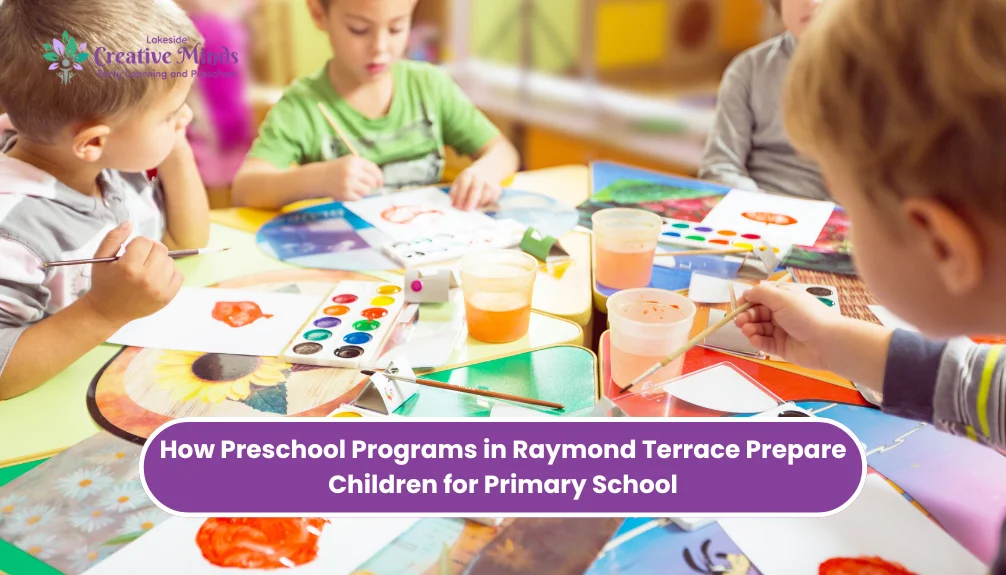
- Creative arts and expression
- Outdoor exploration and physical play
- Problem-solving games and group tasks
These activities develop academic readiness while keeping learning enjoyable and meaningful.
Play-based learning also encourages curiosity, creativity, and critical thinking, which are essential for long-term academic success.
Developing Social Skills for the Classroom
One of the most important areas of preschool preparation is social development.
At Lakeside Creative Minds, children are encouraged to build positive relationships, develop communication skills, and learn how to interact respectfully with others in a supportive environment.
In primary school, children must interact with peers and teachers in structured group environments. Preschool helps children gradually build these skills through daily interaction, preparing them for a smooth transition to formal schooling.
Children learn to:
- Share resources and materials
- Take turns during group activities
- Listen to others
- Cooperate in team-based tasks
- Resolve minor conflicts with support
These experiences help children build positive relationships and adapt to classroom dynamics.
Social confidence developed in preschool often plays a major role in how comfortably children settle into primary school.
Building Emotional Readiness and Confidence
Emotional readiness is just as important as academic preparation.
Preschool environments support children in understanding and managing their emotions in a healthy way.
Children are guided to:
- Recognise and name their feelings
- Manage frustration or disappointment
- Build resilience after challenges
- Develop confidence in new situations
- Feel secure in group environments
Educators provide consistent support, helping children navigate emotional experiences in a safe and structured setting.
This emotional foundation helps reduce anxiety when transitioning to primary school.
Strengthening Communication and Language Skills
Strong communication skills are essential for success in school.
Preschool programs encourage language development through daily interaction and learning experiences.
Children are supported to:
- Express ideas clearly
- Ask questions
- Listen and respond appropriately
- Participate in group discussions
- Develop vocabulary through stories and conversations
These communication skills help children engage confidently with teachers and peers in a classroom environment.
Early exposure to language-rich environments significantly improves readiness for formal learning.
Encouraging Independence and Responsibility
Primary school requires children to manage more tasks independently than in early childhood settings.
Preschool programs help children gradually develop independence through everyday routines.
This includes learning to:
- Manage personal belongings
- Follow daily schedules
- Complete simple self-care tasks
- Clean up after activities
- Make basic choices independently
These experiences build responsibility and confidence, helping children feel capable in a structured school environment.
Early Literacy and Numeracy Foundations
Preschool does not focus on formal academic instruction, but it introduces essential early learning concepts.
Children develop early literacy skills such as:
- Recognising letters and sounds
- Enjoying books and storytelling
- Understanding that print carries meaning
- Expanding vocabulary through conversation
Early numeracy skills are supported through:
- Counting objects
- Recognising patterns
- Sorting and grouping items
- Understanding size, shape, and quantity
These foundational skills prepare children for more structured academic learning in primary school.
Physical Development and Motor Skills
Physical development is another key component of preschool education.
Children develop both gross and fine motor skills through daily activities.
Gross motor skills include:
- Running
- Jumping
- Climbing
- Balancing
Fine motor skills include:
- Drawing and writing
- Cutting with safety scissors
- Manipulating small objects
- Building with blocks
These physical skills are essential for classroom participation, particularly in tasks such as writing and handling learning materials.
The Role of Routine in Preschool Learning
Routine plays a central role in helping children prepare for school.
Preschool programs follow structured daily schedules that include:
- Group learning time
- Free play
- Outdoor activities
- Meals and rest periods
- Transition routines
This structure helps children understand expectations and adapt to predictable environments.
As a result, the transition to primary school becomes more familiar and less overwhelming.
How Preschool Supports Transition to Primary School
The final stage of preschool education focuses on preparing children for the transition to formal schooling.
This includes:
- Familiarity with group learning environments
- Ability to follow instructions
- Confidence in separating from parents
- Participation in structured activities
- Emotional resilience in new settings
Quality childcare in Raymond Terrace often integrates preschool learning approaches to ensure children are well-prepared for this transition.
What Parents Should Look for in a Preschool Program
When selecting a preschool program, families should consider:
- Qualified early childhood educators
- Structured yet flexible learning environments
- Strong communication with families
- Focus on play-based learning
- Support for emotional and social development
- Clear school readiness outcomes
These factors ensure that children receive a balanced and supportive early education experience.
Conclusion
Preschool plays a crucial role in preparing children for primary school by developing the social, emotional, physical, and cognitive skills they need to succeed.
High-quality preschool programs in Raymond Terrace, such as those offered by Lakeside Creative Minds, provide structured, play-based learning experiences that build confidence, independence, and readiness for formal education.
For families considering childcare in Raymond Terrace, understanding the role of preschool at Lakeside Creative Minds can help guide informed decisions that support a child’s long-term learning journey.
By focusing on whole-child development, Lakeside Creative Minds ensures that children transition into primary school with confidence, curiosity, and a strong foundation for future success.
Frequently Asked Questions
What is the purpose of preschool?
Preschool prepares children for primary school by developing foundational skills in communication, social interaction, emotional regulation, and early learning.
How does preschool differ from childcare?
Childcare focuses on care and early learning, while preschool places greater emphasis on school readiness and structured educational experiences.
What skills do children develop in preschool?
Children develop communication, independence, social skills, early literacy and numeracy awareness, and emotional resilience.
Why is preschool important for school readiness?
Preschool helps children become familiar with routines, group learning, and classroom expectations, making the transition to school smoother.
At what age should a child attend preschool?
Most children attend preschool between the ages of three and five before starting primary school.

