
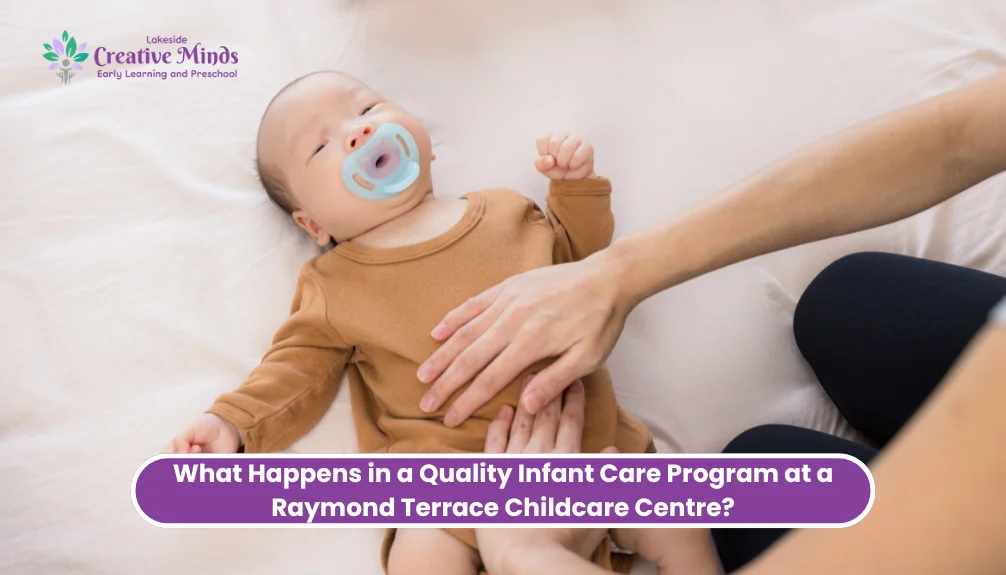

For many parents, enrolling a baby in childcare is a significant milestone. It often comes with excitement, but also plenty of questions. One of the most common concerns is understanding what actually happens throughout the day in an infant care program.
Will my baby receive individual attention? How are feeding and sleep routines managed? What learning opportunities are available for infants?
The reality is that a quality infant care program, such as Lakeside Creative Minds, is about much more than supervision. It provides a safe, nurturing environment where babies can build secure relationships, follow familiar routines, and begin learning through everyday experiences.
At a trusted childcare center like Lakeside Creative Minds in Raymond Terrace, infant care focuses on supporting each baby’s unique needs while encouraging healthy development during the most important years of life.
Why Infant Care Matters in the Early Years
The first two years of life are a period of extraordinary growth.
During this time, babies develop:
- Communication skills
- Emotional connections
- Physical coordination
- Sensory awareness
- Early problem-solving abilities
- Social understanding
Research shows that positive early experiences play a critical role in brain development. Every interaction, conversation, cuddle, and learning opportunity helps shape a child’s future growth.
This is why quality infant care is designed to provide consistent, responsive care that supports both wellbeing and development.
What Is an Infant Care Program?
An infant care program is a specialised childcare environment created specifically for babies and young toddlers.
Unlike programs for older children, infant care prioritises:
- Individual routines
- Responsive caregiving
- Secure attachments
- Sensory exploration
- Physical development
- Emotional wellbeing
Because every baby is different, quality infant programs adapt to each child’s needs rather than expecting babies to follow a single schedule.
The Importance of Individualised Care
One of the defining features of a quality infant care program is personalised attention.
Babies have different:
- Feeding schedules
- Sleep routines
- Comfort needs
- Developmental stages
- Temperaments
Experienced educators work closely with families to understand these individual needs.
For example, one baby may prefer shorter naps throughout the day, while another follows a longer sleep routine. Some babies enjoy active movement and exploration, while others need more time to observe their surroundings.
Respecting these differences helps babies feel secure and supported.
Building Strong Relationships with Educators
Relationships are at the heart of quality infant care.
Babies learn to trust the world through consistent and responsive interactions with caregivers.
At a quality childcare center Raymond Terrace families can expect educators to:
- Respond quickly to babies’ needs
- Offer comfort and reassurance
- Engage in meaningful interactions
- Build trust through consistency
- Learn each baby’s personality and preferences
These strong relationships help babies develop confidence and emotional security.
When babies feel safe, they are more willing to explore, communicate, and engage with their environment.
What Does a Typical Day Look Like?
Every infant care program is slightly different because routines are tailored to individual children.
However, a typical day often includes a combination of care, play, rest, and learning experiences.
Arrival and Settling In
Educators greet families and help babies transition comfortably into the environment.
Parents may share updates about:
- Sleep patterns
- Feeding information
- Health considerations
- Changes in routine
This communication helps educators provide personalised care throughout the day.
Feeding and Nutrition
Feeding is an important part of infant care.
Depending on age and family preferences, educators support:
- Bottle feeding
- Breast milk storage and preparation
- Solid food introduction
- Self-feeding opportunities
Feeding times are more than nutritional moments, they also provide opportunities for connection, communication, and comfort.
Sleep and Rest
Babies need plenty of rest for healthy growth and development.
Quality infant care programs follow safe sleep practices while respecting each child’s individual routine.
Educators carefully monitor sleeping babies and provide calm environments that encourage restful sleep.
Sensory Exploration
Babies learn about the world through their senses.
Sensory experiences may include:
- Soft textures
- Music and sounds
- Colourful materials
- Water play
- Natural objects
- Movement activities
These experiences support brain development and encourage curiosity.
How Early Learning Begins in Infancy
Many people associate learning with preschool-aged children, but learning actually begins from birth.
Quality early learning Raymond Terrace programs understand that infants are constantly learning through exploration and interaction.
Language Development
Educators support communication by:
- Talking with babies
- Reading books
- Singing songs
- Naming objects and actions
Even before babies speak, they are developing important language foundations.
Physical Development
Activities such as:
- Tummy time
- Reaching for toys
- Crawling opportunities
- Assisted movement
help strengthen muscles and coordination.
Cognitive Development
Simple experiences like stacking cups, exploring cause and effect toys, or watching bubbles help babies develop problem-solving skills and curiosity.
Social and Emotional Learning
Babies begin learning how to:
- Build relationships
- Express emotions
- Develop trust
- Interact with others
These early experiences create important foundations for future learning.
Outdoor Experiences for Infants
Outdoor play is valuable even for very young children.
Quality infant care programs often provide safe outdoor opportunities where babies can:
- Feel fresh air
- Observe nature
- Experience different textures
- Practice movement skills
- Explore new environments
Outdoor experiences support both physical development and overall wellbeing.
Communication with Families
A quality infant care program recognises that families and educators are partners.
Regular communication helps parents stay informed about:
- Feeding schedules
- Sleep routines
- Daily activities
- Developmental milestones
- Wellbeing updates
This ongoing partnership ensures consistency between home and childcare environments.
For many Raymond Terrace families, strong communication is one of the most reassuring aspects of quality childcare.
Signs of a High-Quality Infant Care Program
When visiting a childcare centre, look for signs such as:
Warm and responsive educators
Clean and organised infant spaces
Individualised routines for each baby
Calm and welcoming atmosphere
Safe sleep practices
Age-appropriate learning materials
Strong family communication
These indicators often reflect a centre’s commitment to providing high-quality infant care.
Supporting Raymond Terrace Families
Families searching for a trusted childcare center Raymond Terrace want confidence that their baby will receive exceptional care.
A quality infant care program at Lakeside Creative Minds supports not only babies but also parents navigating one of the most important transitions in early childhood.
By providing nurturing relationships, safe environments, and meaningful early learning experiences, Lakeside Creative Minds helps babies build strong foundations for future growth and development.
Final Thoughts
A quality infant care program, such as Lakeside Creative Minds, is about much more than meeting a baby’s daily needs. It is about creating an environment where children feel safe, valued, and supported from the very beginning.
Through responsive caregiving, personalised routines, and age-appropriate learning experiences, babies gain the confidence to explore their world and develop essential life skills.
For families seeking infant care, early learning Raymond Terrace, or a trusted childcare center like Lakeside Creative Minds in Raymond Terrace, understanding what happens each day can provide reassurance and help make the childcare decision a little easier.
Frequently Asked Questions
1. What is an infant care program?
An infant care program is a specialised childcare service that supports babies’ daily routines, emotional wellbeing, and early development.
2. How does infant care support early learning?
Babies learn through sensory exploration, communication, movement, relationships, and everyday interactions with educators.
3. How are feeding and sleep routines managed in childcare?
Quality infant programs follow each baby’s individual feeding and sleep schedule while maintaining safe care practices.
4. What should I look for in a childcare centre for my baby?
Look for qualified educators, personalised care, safe environments, strong communication, and nurturing relationships.
5. Why are educator-child relationships important in infant care?
Consistent and responsive relationships help babies feel secure, build trust, and support healthy emotional development.

