
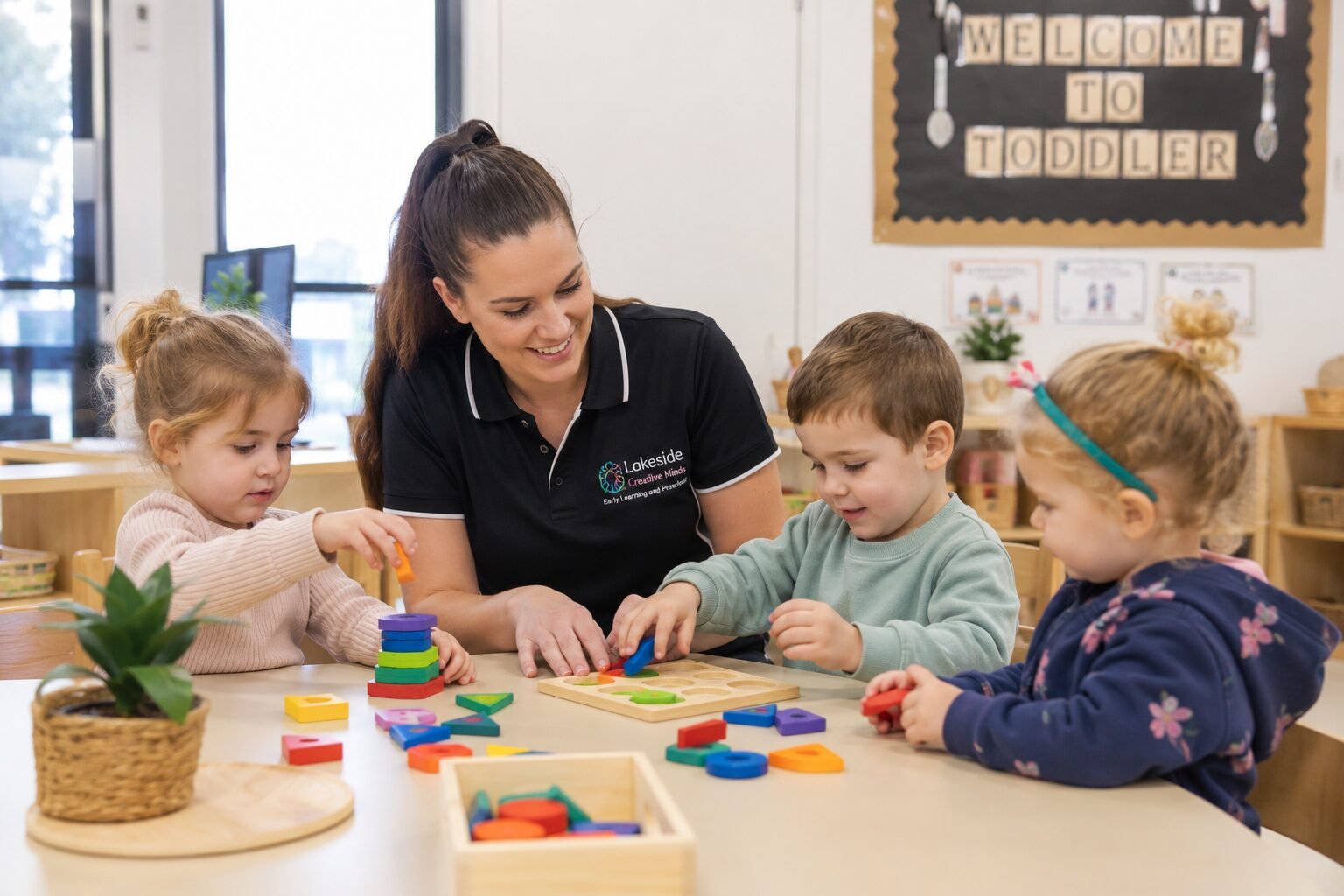

Choosing care for a two-year-old is a different decision from choosing care for a baby. A quality toddler daycare in Raymond Terrace stands out because it is built around how children at this age actually learn through repetition, routine, and steady relationships with the same familiar adults. Toddlers are testing independence, finding language fast, and working out how to share space with other children. The centers that do this well are not the ones with the longest activity list. They are the ones who consistently get a few things right every single day.
At this age, small everyday experiences often have the biggest impact. Simple routines, encouraging conversations, and opportunities to learn through play help your child feel secure while building confidence and social skills. Looking closely at how a centre supports these daily moments can help you make a more informed decision.
Seven Things That Set a Quality Toddler Program Apart
1. Group sizes that sit below the required ratio
In NSW, the regulated minimum for children aged 24 to 36 months is one educator to every five children. Meeting that number is the legal baseline, not a selling point. The programs that stand out deliberately run smaller groups than the regulation requires, which is exactly what Lakeside Creative Minds does through its boutique class sizes. Fewer children in a room means your toddler is spoken to more often, redirected more calmly, and noticed sooner when something is off.
2. A curriculum genuinely mapped to the EYLF
Every approved service in Australia works under the Early Years Learning Framework, but there is a real gap between naming it and building a program around it. Ask how the framework shows up on a normal Tuesday. At Lakeside Creative Minds, the toddler program is EYLF-aligned and NQF-approved, with literacy, numeracy, arts, music and outdoor play built into the daily structure rather than added on for show.
3. Rooms designed for two- and three-year-olds specifically
Toddlers need low, reachable, sturdy spaces they can move through without constant correction. Purpose-built toddler rooms reduce the number of times your child hears “no” in a day, which matters more than most parents expect. When you tour a centre, watch where the two-year-olds actually spend their time and whether the equipment suits their height and coordination.
4. Permanent educators, not a rotating roster
Attachment is the engine of toddler learning. A child who knows their educator settles faster, separates more easily at drop-off, and takes more risks in play. Look for a center staffed by qualified permanent professionals, Diploma and Certificate III trained rather than one leaning heavily on casuals. Ask directly how long the current toddler room educators have been in that room.
5. A predictable rhythm that still bends to your child
Toddlers thrive on knowing what comes next. Meals, rest, outdoor time and group experiences should land at roughly the same point each day, while still leaving room for a child who wakes early from rest or needs a quieter morning. That balance of structure with responsiveness is harder to deliver than a rigid timetable, and it is one of the clearest signs of an experienced team.
6. Communication that reaches you the same day
You should not have to wait until pickup to find out how your child ate or slept. Strong programs send real-time updates on activities, meals and rest, give you direct access to educators, and set developmental goals with you rather than for you. Lakeside Creative Minds treats this transparency as a core part of the program, not an optional extra.
7. A proper settling-in plan before day one
The first fortnight determines how your toddler feels about care for months afterward. A quality centre gives you a personal tour, a custom settling plan, and a staged transition instead of simply confirming a start date. If a service cannot describe what your child’s first three days will look like, that tells you something.
Choosing a Childcare Centre with Confidence
When you visit Lakeside Creative Minds Early Learning and Preschool, you can see how these qualities come together in everyday practice. The toddler program for children aged two to four offers a welcoming environment where your child can learn through play, build confidence, and develop meaningful relationships with caring educators. Guided by the Early Years Learning Framework/EYLF, the program focuses on supporting your child’s growth while keeping you informed through regular communication. If you are considering enrolling your child, arranging a tour early is a good idea, as places in the smaller groups can fill quickly.
FAQs
1. What age should your child start a toddler program?
Most toddler rooms take children from two years, with the transition usually timed around walking confidence, some early language, and readiness for group play rather than a birthday alone.
2. How many children will be in my toddler’s room?
This varies by centre. NSW regulations set a minimum of one educator per five children aged 24 to 36 months, so ask for the actual staffed number rather than the licensed capacity; the difference between the two is where quality lives.
3. Does daycare at this age actually help with school readiness?
Yes. Research consistently links quality early education with stronger language and social outcomes at school entry, and around 90 per cent of brain development occurs before age five, making the toddler years genuinely formative rather than simply supervised.
4. How do I know a centre meets national quality standards?
Check its rating on the ACECQA national register. Roughly nine in ten Australian services are rated Meeting the National Quality Standard, or above, so a rating below that is worth asking about directly.
5. How long does it take a toddler to settle in?
Two to four weeks is typical, with the hardest stretch usually falling in the second week once the novelty wears off. Consistent educators and a short, predictable goodbye routine shorten it considerably.
6. What should you bring on your child’s first day?
A change of clothes, a comfort item, sun protection, and anything tied to their sleep routine. Ask the centre what it supplies so you are not duplicating.

